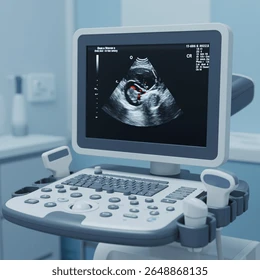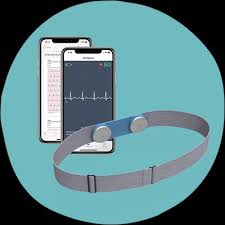
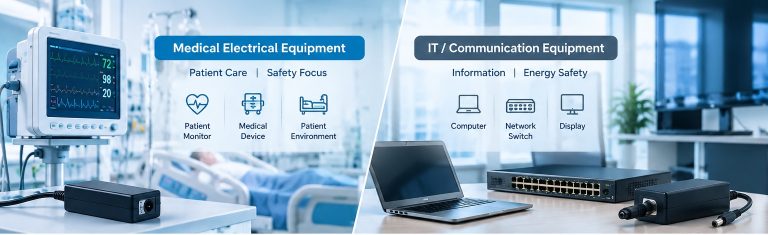
Ask five engineers which safety standard their device needs, and you’ll often get the same shortcut answer: medical equipment follows IEC 60601-1, and IT/AV equipment follows IEC 62368-1. That rule works for the easy cases — a defibrillator, a laptop charger. It breaks down fast for everything in between: a display that shows vital signs data in one installation and hospital scheduling software in another, a tablet a nurse carries on rounds, a power supply meant for “general use” that ends up feeding a patient monitor.
The category on the datasheet doesn’t decide which standard applies. The device’s intended use does. This article walks through what each standard actually protects against, where they genuinely diverge, and how to reason through borderline cases — including what that means for choosing a power supply.
For a broader overview of medical power supply requirements and available power supply types, see our Medical Power Supply guide.
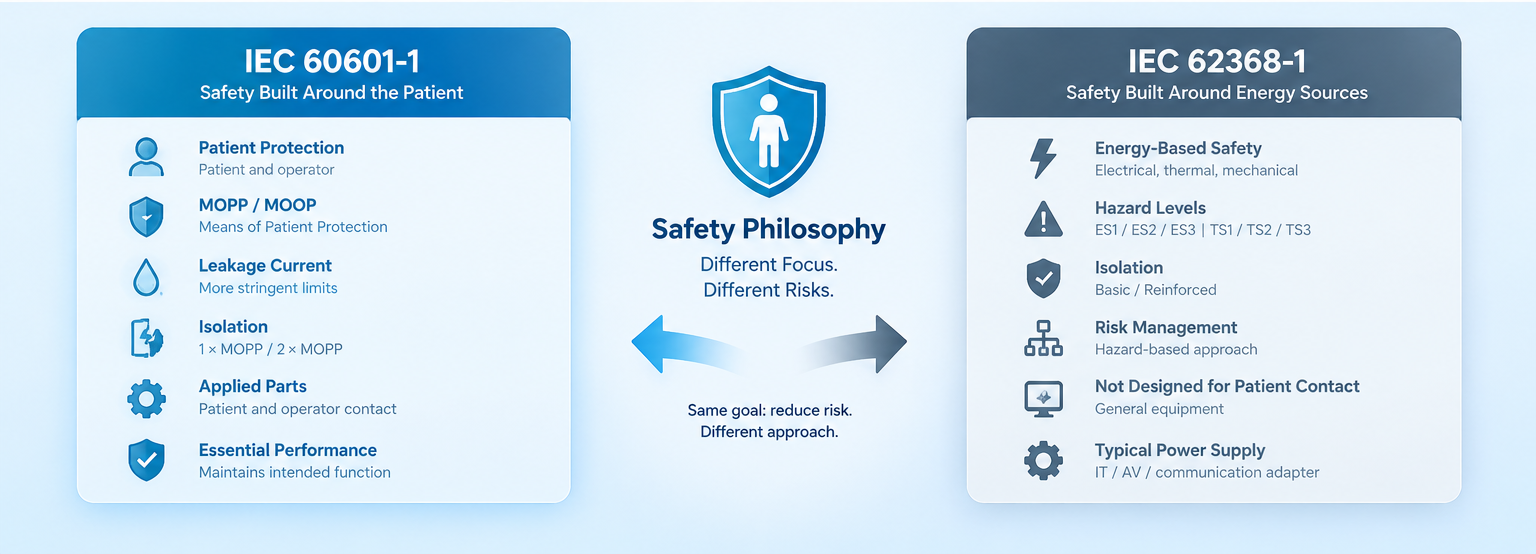
IEC 60601-1: Safety Built Around the Patient
IEC 60601-1 governs medical electrical equipment — devices intended for diagnosis, treatment, or monitoring of a patient under medical supervision. Its safety model centers on two people who didn’t necessarily choose to be near high-energy electronics: the patient and the operator, often in a moment where the patient can’t easily remove themselves from the situation.
That framing drives most of what makes 60601-1 distinct. It requires manufacturers to run a formal risk management process (aligned with ISO 14971) across the device’s full intended use, not just its electrical design. It introduces the concept of essential performance — the functions a device must keep delivering even under a single fault, because losing them could harm the patient (a heart rate monitor that silently stops reading is arguably more dangerous than one that shows an obvious fault). And it defines applied parts — Type B, BF, or CF — based on how directly and how sensitively a part of the device contacts the patient, with CF (cardiac floating) applied parts held to the tightest leakage current limits because current reaching the heart directly is far more dangerous than current reaching intact skin.
IEC 62368-1: Safety Built Around Energy Sources
IEC 62368-1 covers audio/video, information technology, and communications equipment, and it replaced the older IEC 60950-1 (IT equipment) and IEC 60065 (audio/video equipment) across most markets. Its logic works differently. Instead of writing prescriptive rules for specific product types, it applies hazard-based safety engineering (HBSE): identify every energy source in the device — electrical, thermal, mechanical, chemical, radiation — classify how dangerous each one is, and require a safeguard proportional to that danger.
Electrical energy sources fall into three classes. ES1 covers energy too low to cause injury even under a fault (think low-voltage SELV-type circuits). ES2 can produce a painful shock under normal use but nothing worse, provided fault protection is in place. ES3 can be lethal and demands reinforced safeguards — barriers, insulation, or restricted access to skilled personnel only. Thermal energy sources get an equivalent TS1–TS3 classification for burn risk, and power circuits get PS1–PS3 for fire-starting potential. A charger, a monitor, a network switch, and a router all get evaluated the same way under this framework, regardless of what industry buys them.
IEC 60601-1 vs IEC 62368-1 for Power Supply Selection
| Requirement | IEC 60601-1 Power Supply | IEC 62368-1 Power Supply |
|---|---|---|
| Typical Application | Medical equipment | IT / AV / communication |
| Safety Focus | Patient and operator | Energy hazards |
| Patient Protection | MOPP | Not applicable |
| Leakage Current | More stringent | General equipment limits |
| Isolation | 1×MOPP / 2×MOPP | Basic / Reinforced |
| Risk Management | Medical device risk context | Hazard-based |
| Patient Contact | Supported depending on system | Not designed around patient contact |
| Typical Power Supply | Medical power adapter | IT / industrial adapter |
Where the Two Standards Actually Diverge
Safety philosophy. 60601-1 asks “what could go wrong for this specific patient, in this specific use case?” and layers risk management on top of prescriptive electrical rules. 62368-1 asks “what energy sources exist in this device, and are the safeguards proportional to the harm they could cause?” — a more general, product-agnostic approach that doesn’t reference patients or clinical use at all.
Patient protection. Only 60601-1 has a patient protection concept. 62368-1 protects “ordinary persons,” “instructed persons,” and “skilled persons” — categories based on training and awareness of risk, not on whether someone is a patient who may be unconscious, sedated, or physically compromised. Feed a signal into skin or tissue, and 62368-1 simply has no framework for that.
Isolation requirements. 60601-1 requires Means of Patient Protection (MOPP) and Means of Operator Protection (MOOP), typically demanding two independent layers of protection (2×MOPP or 1×MOPP+1×MOOP, depending on the applied part) between mains and any part a patient or operator can touch. 62368-1 uses basic, supplementary, and reinforced insulation tied to its ES/PS class boundaries — conceptually similar, but calibrated for general users rather than a patient in direct contact with a sensor or electrode.
Leakage current. Both standards limit leakage current, but 60601-1’s limits sit far tighter, and they scale down further for Type BF and especially Type CF applied parts, because current that would be a minor annoyance to your hand can be dangerous applied directly to the heart. A power supply built to satisfy an ES1/ES2 leakage budget under 62368-1 will not automatically satisfy a Type BF or CF leakage budget under 60601-1.
Power supply expectations. A 62368-1 compliant adapter needs to manage energy class and basic/reinforced insulation for a general user. A 60601-1 compliant adapter needs 2×MOPP-equivalent isolation, patient-grade leakage current performance, and — often overlooked — documentation the device manufacturer can fold into their own risk file, because a medical device submission needs traceable evidence, not just a compliance mark on a label.
Why “Medical vs. IT” Is the Wrong First Question
The category label on a product often survives from how it’s marketed, not from how it’s actually used. The question that determines the applicable standard is intended use: what is this device meant to do, in what setting, and does it touch or influence the treatment of a patient?
IEC 60601-1 also introduces a concept that trips up a lot of engineers coming from consumer electronics: the medical electrical system. When a non-medical device — a PC, a printer, a network switch — gets connected to medical equipment and used together as a functional unit, that combination can fall under system-level requirements even if the non-medical component was never designed to 60601-1 on its own. A hospital IT department plugging a standard monitor into a diagnostic imaging workstation isn’t just making an IT decision; depending on how that monitor is used, it may be making a medical systems integration decision.
Location matters too. 60601-1 concerns itself with the patient environment — a defined physical zone around where a patient receives care (commonly described as roughly a 1.5-meter envelope around the patient support, though the exact boundary depends on the specific installation and any applicable local requirements). Equipment operating entirely outside that zone, with no patient contact and no influence on diagnosis or treatment, has a much stronger case for staying under 62368-1 even in a hospital building.
Three Examples Worth Working Through
A patient monitor. Continuous ECG, SpO2, or NIBP monitoring, with electrodes or sensors on the patient, feeding data a clinician uses for real-time decisions. This is squarely 60601-1 territory — applied parts, essential performance, the full risk management framework apply without much ambiguity.
A medical-grade display. Here the category label stops being useful. A display used purely to show hospital scheduling, bed occupancy, or general administrative dashboards, with no patient contact and no diagnostic role, can often be treated as ordinary IT equipment under 62368-1. The same physical display, repurposed to render primary diagnostic images a radiologist reads to make a call, or wired into a patient monitoring system as an output device, starts pulling in 60601-1 (or IEC 60601-1-2’s related considerations, plus display-specific standards like IEC 62471 for optical safety). The hardware might not change at all — the intended use does.
A hospital-use PC or tablet. A tablet a nurse uses purely to check a schedule, browse a hospital intranet, or send messages has a reasonable case for 62368-1, provided it never contacts the patient and doesn’t function as part of a medical electrical system. The same tablet, running an app that displays vital signs pulled from bedside monitors and used by clinicians to make treatment decisions, or physically placed within the patient environment during a procedure, moves toward evaluation as part of a medical electrical system under 60601-1’s system-level requirements — even though nothing about the tablet’s hardware changed.
The pattern across all three: standard applicability tracks what the device does and where it operates, not what shelf it sits on in a marketing brochure.
What This Means for Power Supply Selection
Once intended use is clear, power supply selection gets more specific than matching voltage and current on a spec sheet. A few things worth checking before locking in a part:
- Isolation class, not just insulation type. Confirm whether the application needs 2×MOPP (patient-contact use) or whether 62368-1’s ES/PS-based basic/reinforced insulation is sufficient for a non-patient-contact device.
- Leakage current against the applied part classification. A power supply rated for general IT use may not meet the tighter leakage budgets required for Type BF or CF applied parts, even at the same output voltage and power.
- Creepage and clearance distances. These scale with working voltage and required insulation level under both standards, but the numbers aren’t interchangeable between them — a design margin adequate for 62368-1 isn’t automatically adequate for 60601-1.
- Documentation depth. A 60601-1 project usually needs a power supply with a full test report and traceable component-level data the device manufacturer can reference in their own technical file — not just a certificate on a datasheet.
How XJK POWER Approaches Medical Power Supply Selection
At XJK POWER, we typically start with the application rather than the output rating alone. Two devices may both require a 24V 5A power supply, but their safety requirements can be completely different depending on whether the equipment is used near the patient, connected to a medical electrical system, or intended for general IT or industrial use.
For medical power supply projects, our engineering team evaluates key requirements including:
- Intended use of the final equipment
- Required IEC 60601-1 protection level
- 1×MOPP or 2×MOPP isolation requirements
- Leakage current limits
- Patient-contact or non-patient-contact applications
- Output voltage and power requirements
- Mechanical dimensions and connector configuration
- Required certifications and market access
This approach helps OEM and medical device manufacturers avoid selecting a power supply based only on voltage, current, or a generic “medical grade” label.
A Certified Power Supply Doesn’t Certify Your Product
This point gets missed often enough that it’s worth stating directly: sourcing an IEC 60601-1 certified power supply reduces risk and simplifies your own certification path, but it does not automatically make your finished device compliant. The power supply is one component in a system-level evaluation. Your enclosure, your applied parts, your software’s essential performance behavior, your EMC design, and your risk management file all get assessed independently. A compliant power supply is necessary groundwork, not a substitute for the rest of the work.
Power Supply Selection Is Only One Part of the Compliance Process
For OEM and custom medical device projects, power supply selection should be considered early in the product development process. Choosing the wrong safety architecture can lead to redesign work later, especially when IEC 60601-1 testing reveals additional isolation, leakage current, or documentation requirements.
XJK POWER works with OEM and equipment manufacturers on custom medical power supply projects where electrical, mechanical, and application requirements need to be considered together. Depending on the project, this may include output customization, connector configuration, enclosure requirements, and power supply selection for IEC 60601-1 related applications.
The goal is not simply to provide a power adapter with the required voltage and current, but to help ensure the power architecture is appropriate for the intended application before the product design is finalized.
A Practical Way to Decide
Before assuming a standard based on product category, work through these questions in order:
- Does the device contact the patient, or does its output directly influence a diagnosis or treatment decision? If yes, 60601-1 is very likely in scope.
- Does the device operate within the patient environment, even without direct contact? Location alone can pull equipment into system-level medical requirements.
- Will the device connect to, or function as part of, a medical electrical system? If so, evaluate it under IEC 60601-1’s system requirements, not as a standalone IT product.
- If none of the above apply, and the device is general-purpose IT, AV, or communications equipment operating outside clinical use, IEC 62368-1 is the more appropriate framework.
Run through these early — during architecture and power supply selection, not after the design is frozen. Reclassifying a device from 62368-1 to 60601-1 midway through development almost always means revisiting the power supply, the isolation design, and the enclosure, not just updating paperwork.
If you’re specifying a power supply for a device where the answer to question 1 or 2 is genuinely unclear, that ambiguity is worth resolving with your test lab or a regulatory consultant before committing to a component. It’s a cheaper conversation to have early than a redesign to have late.