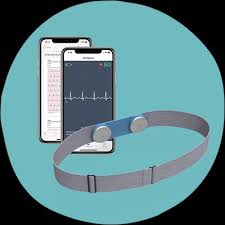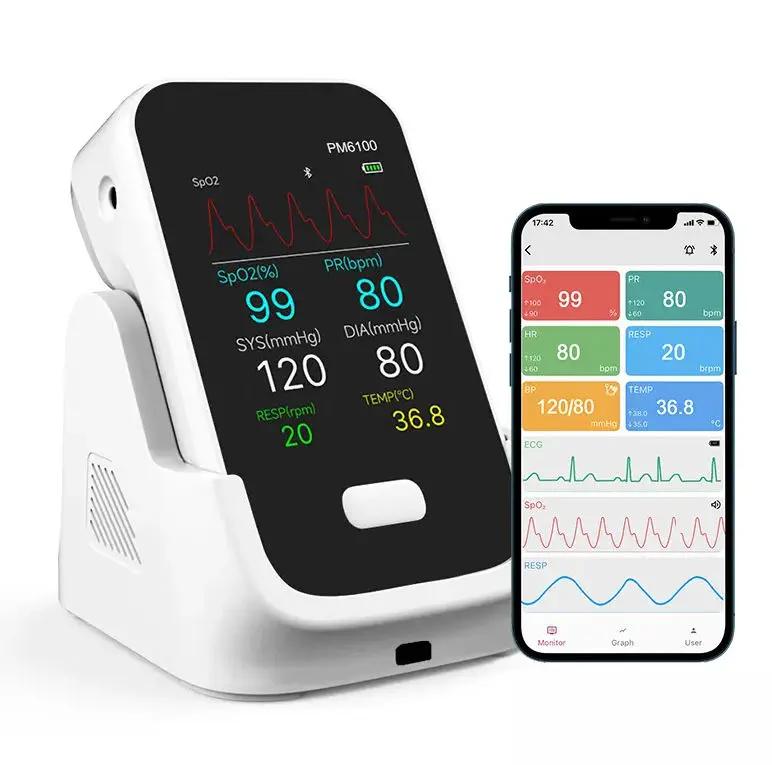
Multi-Parameter Patient Monitor Power Supply Solution for Post-Surgical Care

Compact multi-parameter patient monitors provide reliable vital sign monitoring during post-surgical recovery, general ward care, and other clinical applications. This case study explores a medical AC-DC power supply solution designed to support continuous monitoring of ECG, heart rate, SpO₂, blood pressure, respiration, and temperature while maintaining a compact and reliable power architecture for the medical device.
Project Overview

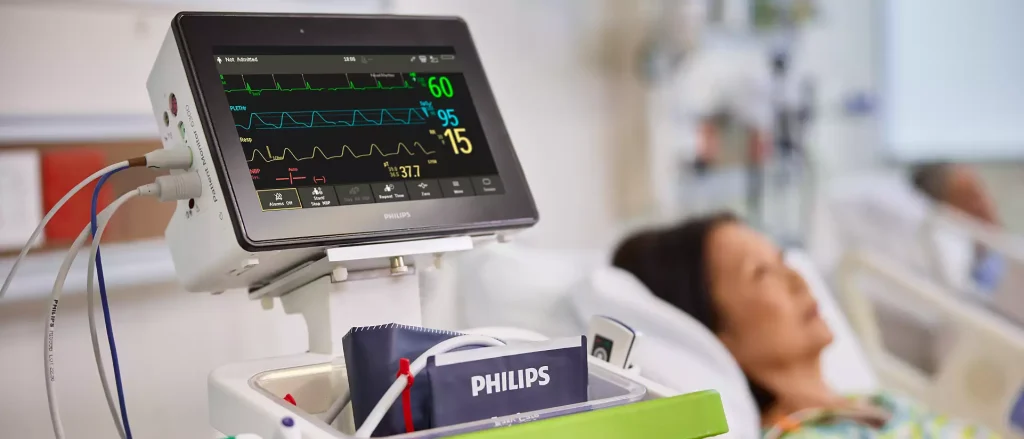
Compact multi-parameter patient monitors are widely used when patients require short-term or continuous observation of vital signs without the need for a large ICU-grade monitoring system.

In post-surgical care, for example, patients may require closer observation during the first several hours or day after a procedure. A compact patient monitor can be placed on a bedside table, medical cart, or other convenient surface to continuously monitor key physiological parameters such as heart rate, SpO₂, non-invasive blood pressure, respiration, and temperature.

Unlike permanently installed bedside monitoring systems, these compact monitors are often moved between rooms or used only when closer monitoring is required. This creates specific power requirements: the external AC-DC power supply must provide stable and reliable output in a compact form factor while supporting continuous operation and the monitor’s internal battery charging function.

For this application, XJK Power developed a medical-grade AC-DC power solution designed to provide reliable power for compact multi-parameter patient monitoring equipment in hospital and clinical environments.

Project Item Details
Application Multi-Parameter Patient Monitor
Primary Use Post-Surgical Patient Monitoring
Clinical Environment Hospitals, General Wards, Recovery Areas, Clinics
Monitored Parameters ECG / Heart Rate, SpO₂, NIBP, Respiration, Temperature
Equipment Type Compact Desktop / Bedside Patient Monitor
Power Architecture External AC-DC Power Adapter + Internal Battery
Recommended Power Range 60W–90W
Input 100–240V AC
Output DC, according to monitor requirements
Power Supply Type Medical AC-DC Adapter
Key Requirements Electrical Safety, Stable Output, Compact Size, Reliable Continuous Operation

Typical Power Architecture

Customer Challenge

The customer required a reliable external power solution for a compact multi-parameter patient monitor intended for hospital and clinical environments. Although the monitor is relatively small, its power system needs to support several functions simultaneously, including the display, monitoring modules, signal processing, control electronics, and internal battery charging.

The main challenge was to select a power adapter that could provide sufficient power for continuous monitoring without compromising the compact form factor of the equipment.

In addition, because the monitor is used in a medical environment, the power supply needed to meet appropriate medical electrical safety requirements and provide reliable isolation and protection. The DC output interface also needed to match the monitor’s voltage, connector, polarity, and cable requirements.

Therefore, the power solution needed to balance power capacity, electrical safety, compact size, thermal performance, and OEM integration requirements.

XJK Engineering Solution

For compact multi-parameter patient monitors, a 60W–90W medical AC-DC power adapter can provide an appropriate power range for systems integrating a display, multiple vital-sign measurement modules, control electronics, and internal battery charging.

The final power rating should be selected according to the monitor’s maximum operating power, battery charging requirements, peripheral modules, and the manufacturer’s specified input requirements.

Parameter Recommended Specification
Application Multi-Parameter Patient Monitor
Power Range 60W–90W
Output Voltage 12V / 19V / 24V*
Input 100–240V AC
Output Type DC
Application Type Medical Equipment
Operating Mode Continuous / Battery Charging
Adapter Type External Medical AC-DC Adapter

How We Develop a Custom Power Supply

Our engineering process helps  device manufacturers move efficiently from requirement definition to production-ready power solutions.

Step1
Requirement
Review

Review voltage, current, connector, plug type, installation environment, and medical device requirements.

Step2
Engineering
Evaluation

Electrical feasibility assessment, connector matching, and product configuration planning.

Step3
Prototype
Development

Prototype recommendation or customized sample preparation based on project requirements.

Step4
Compliance &
Validation

Review safety expectations, EMC considerations, and application-specific requirements.

Step5
Sample
Approval

Functional verification and customer-side evaluation before production.

Step6
Production &
Delivery

OEM production support for customized healthcare power solutions.

Technical Design Considerations

1. Sufficient Power Capacity

The power supply needs to provide sufficient output power for the monitor’s maximum operating load while maintaining additional capacity for internal battery charging and potential peripheral functions. For compact multi-parameter monitors, a 60W–90W power range can be considered depending on the actual system configuration.


2. Medical Electrical Safety

As the equipment is intended for use in a medical environment, the power supply should be designed according to the applicable medical electrical safety requirements. Appropriate isolation, leakage current control, insulation, and protection mechanisms are important considerations when integrating an AC-DC adapter with patient monitoring equipment.


3. Stable DC Output

Stable DC output is essential for reliable operation of the monitor’s display, measurement modules, control circuits, and signal processing electronics. The selected adapter should maintain stable output under normal operating and battery-charging conditions.


4. Compact Form Factor and Thermal Performance

Because the patient monitor is designed for flexible placement on a bedside table, medical cart, or other compact clinical workspace, the external adapter should have a practical form factor without creating unnecessary installation constraints.

Thermal performance should also be considered for extended operating periods, particularly when the adapter is supplying both the monitor and its battery charging circuit.


5. DC Interface and OEM Integration

The DC output connector, polarity, cable length, and mechanical interface must be matched to the monitor’s input requirements. For OEM applications, customization of the output specification, connector, cable assembly, and mechanical configuration can help simplify integration into the final medical device.

Project Result

The resulting power solution provides a compact and reliable external AC-DC power architecture for multi-parameter patient monitoring equipment.

The selected power range provides sufficient capacity for the monitor’s operating load while supporting internal battery charging. The medical-oriented design also addresses key requirements related to electrical isolation, protection, stable DC output, and long-duration operation.

By using an external medical AC-DC adapter, the patient monitor can maintain a compact and flexible equipment design while receiving reliable AC power in hospital and clinical environments.

The solution can also be adapted to different patient monitor configurations through customized output voltage, power rating, DC connector, cable length, and other OEM requirements.

Recommended Products

24W Medical Power Adapter

For ECG monitoring devices with larger rechargeable batteries, faster charging requirements, integrated displays, or additional communication functions, a 24W adapter can provide additional output capacity.

60W Desktop Medical Power Adapter 15V 4A

The 60W Desktop Medical Power Adapter (15V 4A) is engineered to provide dependable and medically compliant power for healthcare equipment operating in hospitals, clinics, laboratories, and home healthcare environments.

FAQ

1. What type of patient monitor is this power supply designed for?

The solution is intended for compact multi-parameter patient monitors used to monitor parameters such as ECG, heart rate, SpO₂, non-invasive blood pressure, respiration, and temperature.

2. What power rating is typically suitable for a multi-parameter patient monitor?

Many compact patient monitoring systems can be served by power supplies in the 60W–90W range, although the required rating depends on the monitor’s maximum operating power, battery charging requirements, display, and additional modules.

3. Can the power adapter charge the monitor’s internal battery?

Yes. For patient monitors equipped with an internal rechargeable battery, the external AC-DC adapter can provide power during normal AC operation and support the monitor’s battery charging circuit, provided the adapter specifications match the manufacturer’s requirements.

4. What output voltage is commonly used for patient monitors?

The required output voltage varies by monitor design. Common configurations may include 12V, 19V, and 24V DC. The exact voltage should always be selected according to the monitor manufacturer’s electrical specifications.

5. Can XJK customize the power supply for a patient monitoring device?

Yes. XJK Power provides OEM/ODM customization including output voltage, power rating, DC connector, cable length, plug configuration, enclosure design, and other electrical or mechanical requirements.

Need a Medical Power Supply for Your Patient Monitor?

Whether you are developing a compact vital signs monitor, bedside patient monitor, or other medical monitoring equipment, XJK Power can help you select or customize a suitable AC-DC power solution.

Share your required output voltage, power rating, connector specification, and certification requirements with our engineering team.

Related Resources

Request a Quote

Leave your requirements and we’ll get back to you within 24 hours.