After reviewing the initial configuration, the next step was to clarify the mechanical and electrical details of the output cable.
For industrial equipment manufacturers, these seemingly small details can affect installation efficiency, wiring reliability, and compatibility with the final equipment assembly.
XJK focused on three areas during the configuration review.
Adjustment 1: DC Cable Length
The DC cable length needed to match the distance between the external adapter and the equipment’s internal terminal block.
An excessively short cable could make installation difficult, while an unnecessarily long cable could complicate cable routing and equipment assembly.
The cable length therefore needed to be confirmed according to the actual equipment layout.
In addition, the cable specification had to be evaluated for its current-carrying capacity and voltage drop under the intended operating conditions.
Adjustment 2: Bare-Wire Preparation and Terminal Compatibility
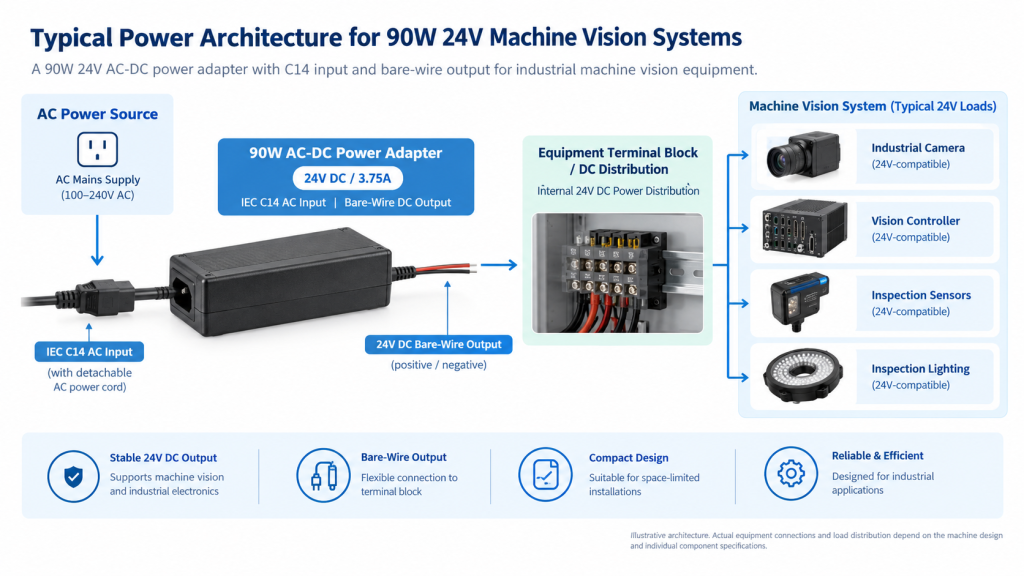
The customer required a bare-wire output that could be connected to the equipment’s internal terminal block.
XJK reviewed the relevant cable details, including conductor size, stripping length, and terminal compatibility.
The purpose was to ensure that the output cable could be properly prepared and securely connected during equipment assembly.
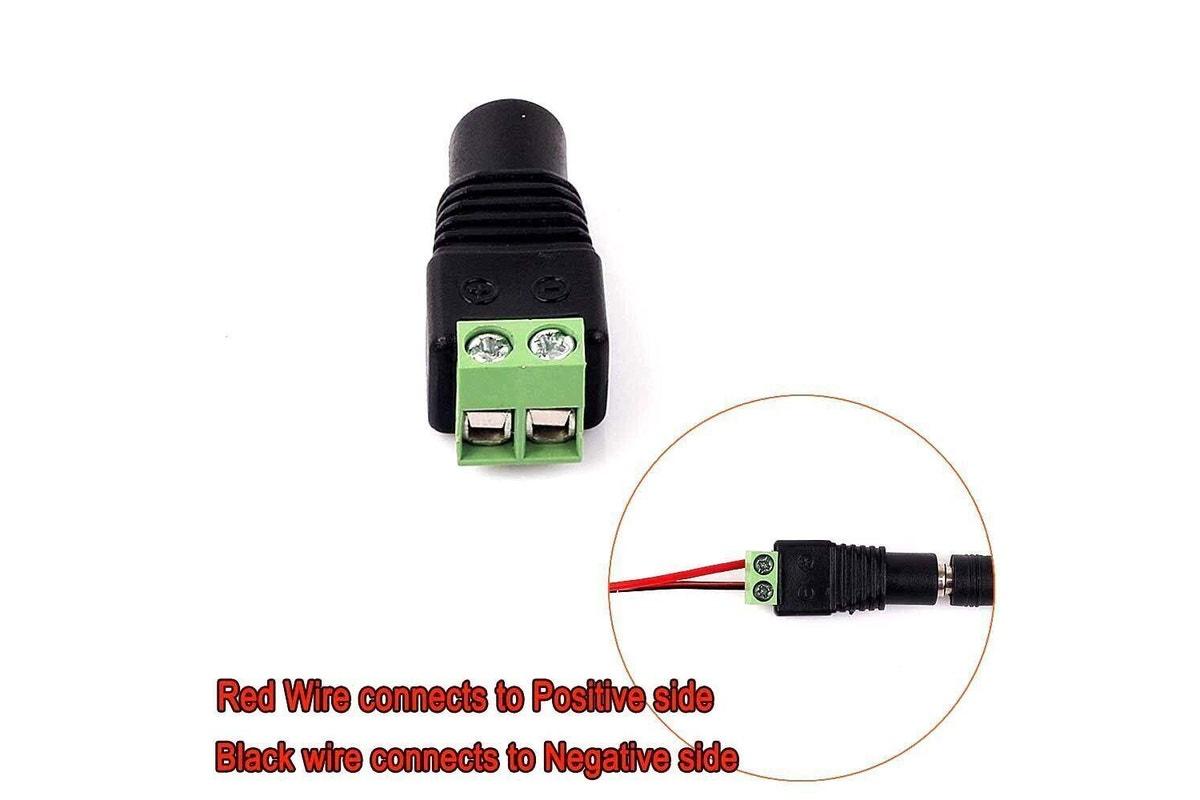
Polarity identification was also an important consideration. The positive and negative conductors needed to be clearly identified according to the confirmed wiring specification.
Adjustment 3: Electrical Load and Power Margin
Although the required rated output was 24V DC at up to 3.75A, the connected equipment’s actual load profile also needed to be considered.
Industrial machine vision systems may contain multiple electronic components with different power consumption characteristics.
The total continuous load, startup current, and any transient demand needed to be reviewed before confirming the final power adapter selection.
The 90W rating represented the adapter’s maximum rated output power, not a guarantee that every combination of cameras, controllers, and accessories could be powered simultaneously.
This review helped establish whether the proposed configuration was appropriate for the intended equipment.