Introduction
Medical imaging and diagnostic equipment play a critical role in modern healthcare, supporting accurate diagnosis and real-time clinical decisions. These systems require highly stable, low-noise, and safe power solutions to ensure reliable performance.
In many applications, a 19V external medical power adapter (around 120W) has become a preferred choice.
This article explores the power requirements of imaging systems and explains why 19V 120W power adapters are widely used in diagnostic and imaging equipment.
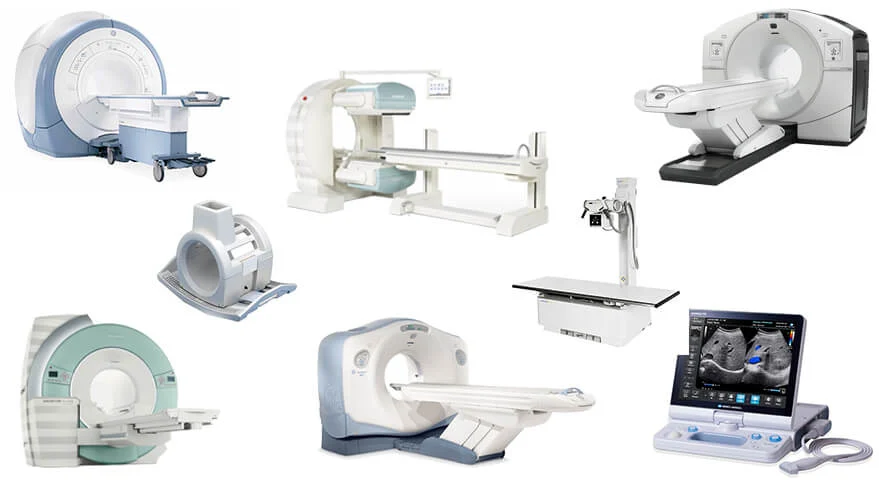
What Is Medical Imaging & Diagnostic Equipment?
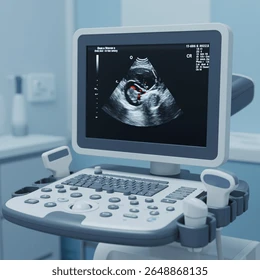
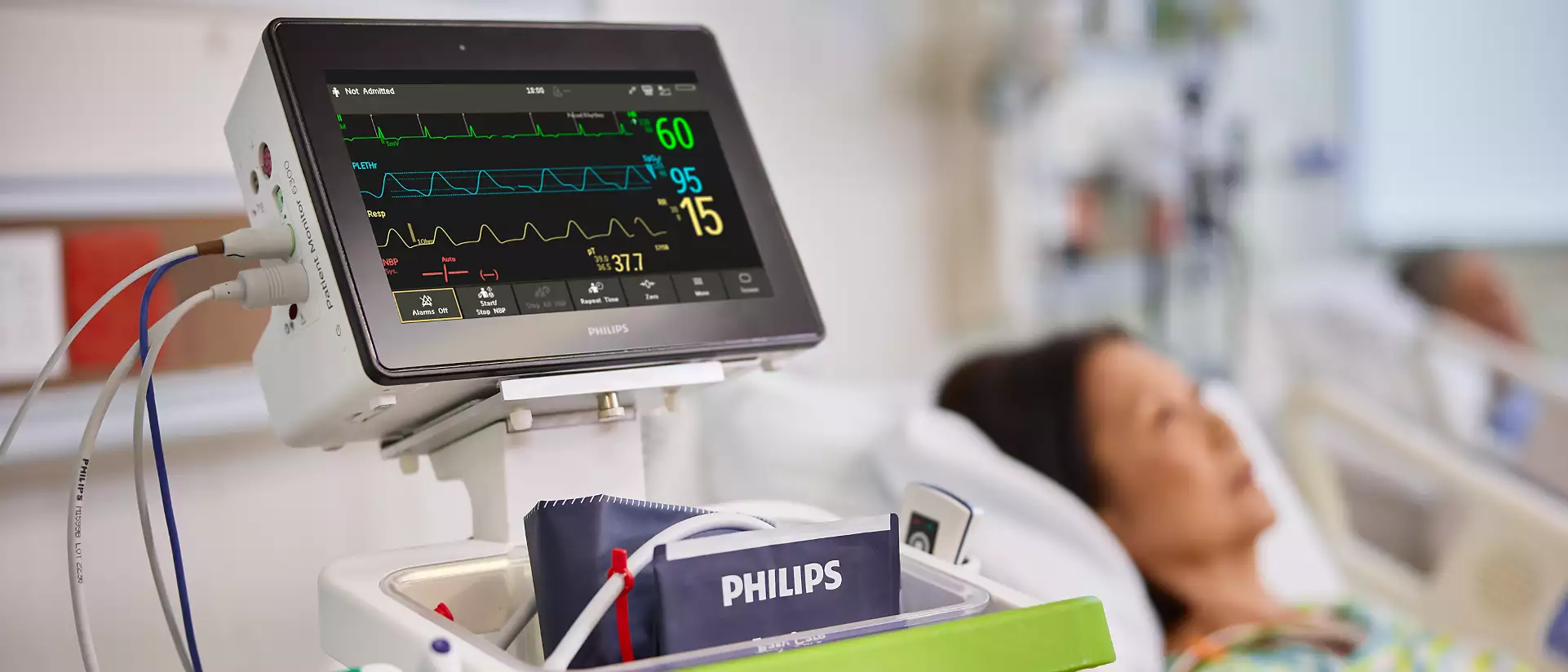
This category includes devices used for visualization, analysis, and diagnosis, such as:
- Medical displays (diagnostic monitors)
- PACS workstations (image viewing systems)
- Surgical imaging display systems
- Portable imaging control units
π Most of these systems are built on embedded computing platforms, which strongly influences their power design.

Power Requirements for Imaging Systems
Medical imaging equipment has stricter power requirements than typical electronics:
β Stable and Clean DC Output
- Regulated 19V DC output
- Low ripple and noise
π Critical for image clarity and signal accuracy
β Moderate-to-High Power Range
- Typical consumption: 80W β 150W
- Requires stable continuous output
β Medical Safety Compliance
- IEC 60601-1 standard
- Low leakage current
- Reinforced insulation
β Continuous Operation
- 24/7 operation in hospitals
- High reliability and durability required
Why 120W Is the Optimal Power Range
For many imaging systems, 120W sits in the optimal range.
β Medical Displays
- High brightness and resolution (4K / 5MP)
- Power consumption: 60Wβ120W
β PACS / Imaging Workstations
- CPU + GPU + storage
- Multi-display output
- Typical load: 90Wβ140W
β System Margin
A 120W adapter provides:
- Headroom for peak loads
- Stable performance under dynamic conditions
π This makes 19V 6.3A (120W) a widely adopted configuration.
Why 19V Is Common in Imaging Equipment
The use of 19V is not randomβit is driven by system architecture.
β Embedded System Compatibility
Most imaging systems are based on:
- Industrial PCs
- Laptop-derived platforms
π These platforms typically require 19V DC input.
β Efficient Power Delivery
Compared to 12V:
- Lower current for the same power
- Reduced cable loss and heat
β Standardization
- Widely available components
- Faster system integration
Typical Applications
1. Medical Display Systems
High-resolution monitors used for diagnostic imaging.
2. PACS & Imaging Workstations
Workstations used for image processing and analysis.
3. Surgical Imaging Systems
Used in operating rooms for real-time imaging display.
4. Portable Diagnostic Devices
Includes compact imaging and diagnostic tools with external power adapters.
XJK Power Solution
To meet these requirements, Shenzhen Xinjukang Technology (XJK Power) Co., LTD provides a reliable solution:
π 19V 6.3A 120W Medical Power Adapter
Key Features:
- Output: 19V DC / 6.3A
- Power: 120W
- Certification: IEC 60601-1
- Ultra-low leakage current
- High efficiency design
- Full protection: OVP / OCP / SCP
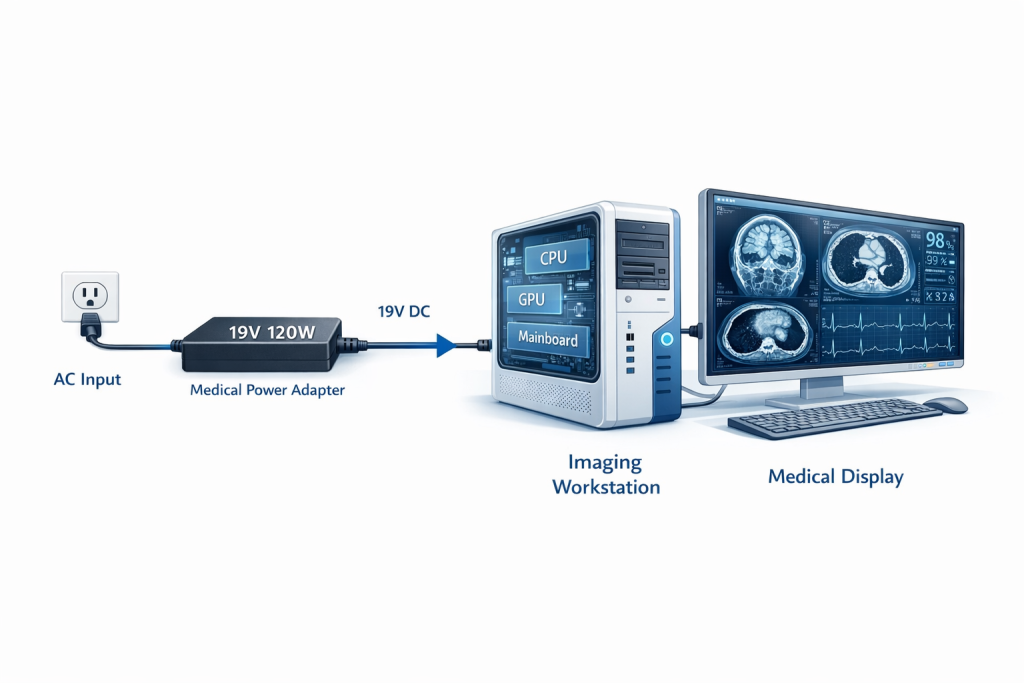
Typical System Architecture
A standard imaging system power setup:

AC Input β Medical Power Adapter (19V 120W) β Imaging Workstation / Display β Processing & Output
π External adapters help:
- Reduce internal heat
- Improve safety
- Simplify certification
FAQ
1. What power supply is used for medical imaging equipment?
Most systems use external DC power adapters, commonly 19V in the 100β150W range.
2. Why is low noise important in imaging systems?
Power noise can affect image quality and signal accuracy.
3. Is 120W enough for imaging workstations?
Yes, for most configurations, 120W provides sufficient power with margin.
4. Are medical certifications required?
Yes, IEC 60601-1 is essential for safety compliance.
Conclusion
Medical imaging and diagnostic equipment demand stable, efficient, and safe power solutions. A 19V 120W medical power adapter offers the ideal balance of performance, compatibility, and compliance.
With reliable and certified solutions, XJK Power supports advanced healthcare systems in delivering accurate and consistent results.