
Selecting the right power supply is a critical step in any OEM project. Whether you’re designing industrial equipment, medical devices, or networking systems, the wrong choice can lead to instability, overheating, certification failure, or even product recalls.
In this guide, we’ll break down the main types of power supplies and—more importantly—help you determine which one is right for your specific application.

Why Power Supply Selection Matters in OEM Design
For OEM engineers and sourcing teams, a power supply is not just a component—it directly impacts:
- System stability and lifespan
- Energy efficiency compliance (DOE Level VI, EU CoC Tier 2)
- Thermal performance
- Certification success (UL, CE, medical standards)
- Total product cost
A poorly matched power solution can result in repeated redesigns and delayed time-to-market..
Main Types of Power Supplies (Quick Overview)
Before diving into selection criteria, here’s a simplified overview of the most common power supply types used in OEM applications:
1. AC-DC Power Supplies
Convert AC mains power into regulated DC output.
👉 Common in: industrial equipment, consumer electronics, medical devices
2. DC-DC Converters
Convert one DC voltage level to another.
👉 Common in: embedded systems, battery-powered devices
3. Switching Power Supplies (SMPS)
High-efficiency designs using high-frequency switching.
👉 Best for: high power density, compact systems
4. Linear Power Supplies
Low-noise, simple architecture but less efficient.
👉 Best for: sensitive analog or audio applications
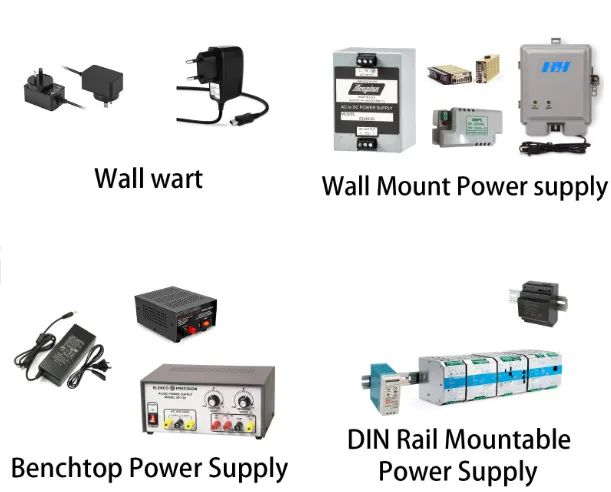
Power supplies can be categorized by design principle, output type, and application scenario. Common types for OEM applications include:
- AC-DC and DC-DC Power Supplies
- Linear and Switching Power Supplies
- High-Wattage Power Supplies
- Medical Power Supplies
- POE (Power over Ethernet) Solutions
- Custom / Bare Board Solutions
Each type has unique characteristics, advantages, and limitations. Understanding these differences is key for OEM clients seeking optimal performance, compliance, and reliability.More details, please refer to our link.
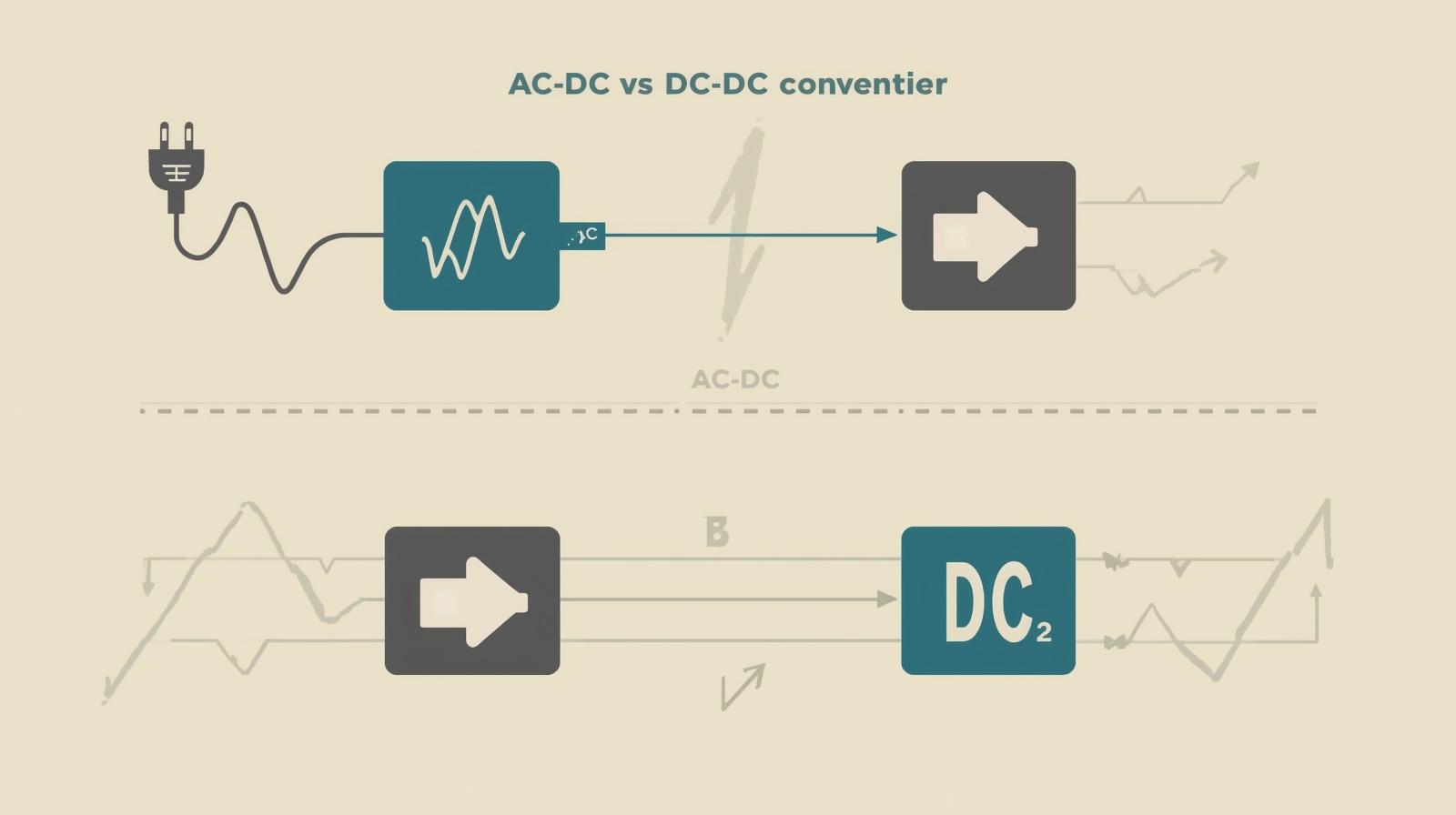
AC-DC vs DC-DC Power Supplies
- Convert AC input to regulated DC output
- Widely used in consumer electronics, industrial equipment, and office devices
- Advantages: stable output, broad applicability
- Considerations: larger size, lower efficiency than DC-DC
DC-DC Power Supplies
- Convert one DC voltage level to another
- Ideal for embedded systems, industrial controls, and communication devices
- Advantages: compact, efficient, flexible output
- Considerations: thermal management, EMI
AC-DC vs DC-DC Power Supplies: Key Differences
| Feature | AC-DC Power Supply | DC-DC Converter |
|---|---|---|
| Input Source | AC (mains) | DC |
| Main Function | AC to DC conversion | DC voltage regulation |
| Typical Use | External adapters | Internal modules |
| Application | Industrial, medical, IT | Embedded systems |
👉 Practical insight:
Most OEM products require both:
- AC-DC adapter (external power)
- DC-DC conversion (inside the system)
OEM Selection Tip:
- For space-constrained devices, DC-DC converters are often preferred
- AC-DC adapters are reliable for stationary industrial and office equipment
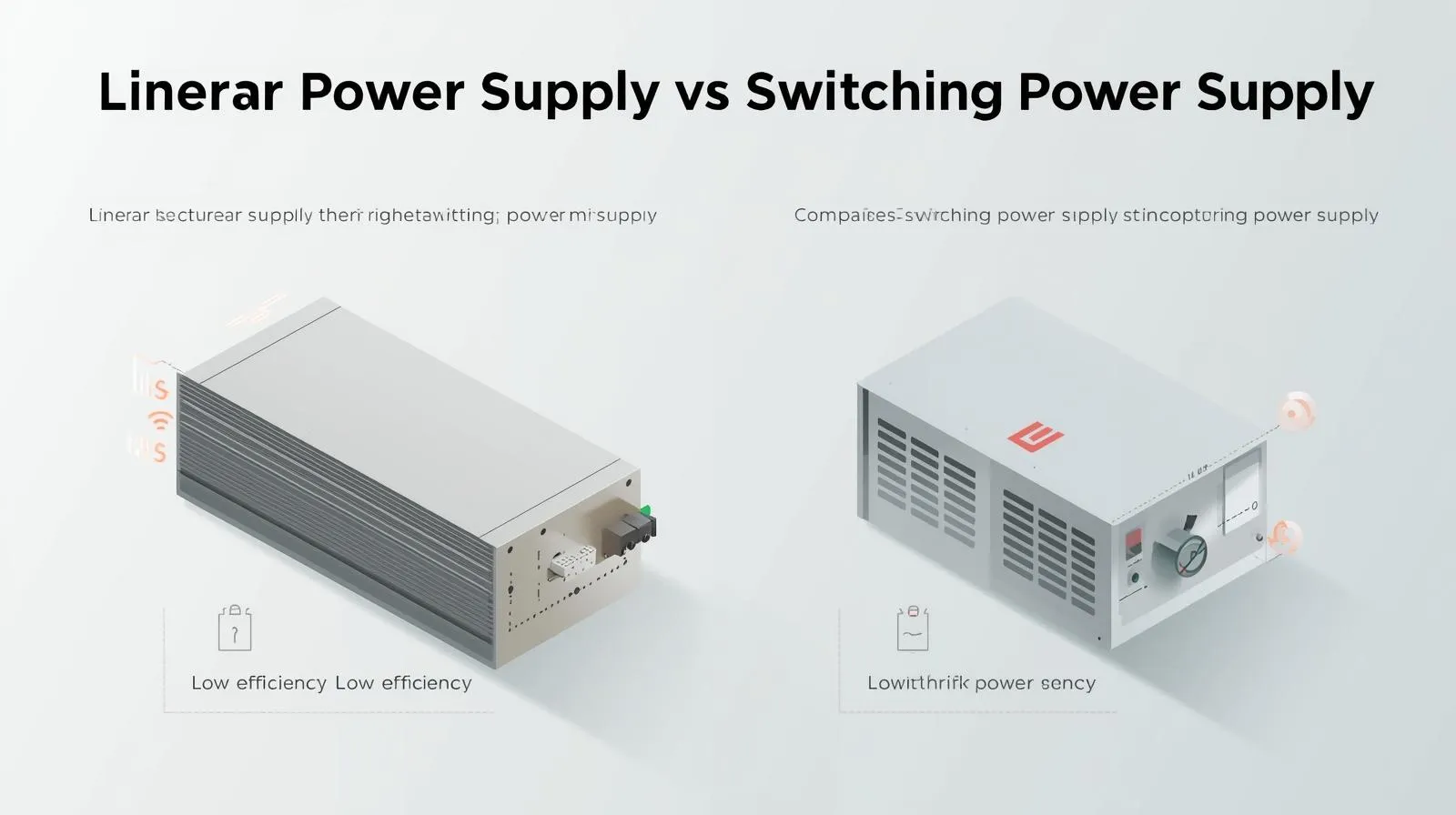
Switching vs Linear Power Supplies: Which One to Choose?
Linear Power Supplies
- Regulate voltage with a linear control mechanism
- Low noise, excellent stability → ideal for laboratory instruments, audio equipment
- Lower efficiency, larger footprint
Switching Power Supplies
- Regulate output via high-speed switching
- Efficient, compact, lightweight → ideal for industrial, medical, and high-power applications
- Considerations: higher output noise, may require filtering
OEM Selection Tip:
- Use switching for high-power or efficiency-critical application
- Use linear for sensitive analog circuits
Specialized Power Supply Types
High-Wattage Power Supplies
- 120W, 240W adapters for industrial servers or communication devices
- Design considerations: heat dissipation, long-term reliability, stable output
- Must meet UL60601, EN60601 certifications
- Prioritize patient safety, low leakage current, stable output
- Applications: diagnostic equipment, clinical devices
POE (Power over Ethernet) Power Supplies
- Deliver power via Ethernet cables → reduces cabling
- Considerations: max load limits, energy efficiency
- Applications: networking, surveillance, IoT devices
Custom / Bare Board Solutions
- Shenzhen Xinjukang Technology (XJK Power) offers extensive R&D and customization experience
- Tailored to OEM needs: dimensions, outputs, interfaces, power ratings
- Focus on thermal management, EMC compliance, efficiency
How to Choose the Right Power Supply for OEM Applications
This is the most important part for OEM buyers and engineers.
1. Input Voltage Range
Ensure compatibility with your target market:
- 100–240V AC (global standard)
- Consider surge and fluctuation tolerance
2. Output Power Requirements
Define:
- Voltage (e.g., 12V / 24V / 48V)
- Current
- Total wattage
👉 Example:
For industrial displays or networking devices, a 120W power adapter is a common requirement.
3. Efficiency Standards
Mandatory for many markets:
- DOE Level VI (USA)
- EU CoC Tier 2
Higher efficiency = lower heat + longer lifespan
4. Certifications & Compliance
Depending on your application:
- UL / CE / FCC
- Medical certifications (IEC 60601)
5. Thermal Design & Reliability
Key factors:
- Operating temperature range
- Cooling method
- MTBF (Mean Time Between Failures)
6. Form Factor & Installation
- External adapter vs open-frame
- Desktop vs wall-mount
- Space constraints inside device
Once you’ve defined the right specifications and power supply type for your application, the next critical step is selecting a reliable manufacturer.
Choosing the wrong supplier can lead to inconsistent quality, certification issues, and production delays.
👉 Read our complete OEM supplier checklist to avoid common risks:
https://xjkadapter.com/power-adapter-manufacturer-in-china-oem-supplier-checklist/
Typical OEM Application Scenarios
Understanding real-world use cases helps narrow down your selection.
Industrial Equipment
- Requires high reliability and long lifespan
- Often uses high-wattage AC-DC adapters
Learn more:→/solutions/industrial-power-solutions/
Medical Devices
- Strict safety and leakage current requirements
- Certified medical-grade power supplies required
Explore: → /product-category/medical-power-adapter/
Networking & Communication Devices
- Often use 48V systems or POE solutions
- Require stable output under continuous load
Related products:https://xjkadapter.com/product/48v-2-5a-120w-power-adapter-for-poe-switch-industrial-ac-dc-power-supply/
LED Display & Digital Signage
- High power demand
- Continuous operation
👉 Typical solution: 120W–200W power adapters
Common Mistakes When Choosing a Power Supply
Avoid these frequent OEM pitfalls:
- Undersizing power capacity
- Ignoring efficiency regulations
- Choosing unverified suppliers
- Overlooking thermal conditions
- Lack of certification planning
Need Help Selecting the Right Power Supply?
At XJK Power, we specialize in OEM and ODM power solutions tailored for:
- Industrial systems
- Medical devices
- Networking equipment
- High-power applications (up to 120W and beyond)
We provide:
- Certified power adapters (UL, CE, medical)
- Custom design support
- Stable supply chain for mass production
👉 Get expert support for your project: [email protected]
If you’re also evaluating suppliers for your project, it’s important to follow a structured selection process.
👉 Here’s a practical checklist to help you choose the right OEM power adapter manufacturer:
https://xjkadapter.com/power-adapter-manufacturer-in-china-oem-supplier-checklist/
Conclusion
Choosing the right power supply for OEM applications is not just about specifications—it’s about ensuring long-term product reliability, compliance, and performance.
By understanding the differences between power supply types and aligning them with your application requirements, you can significantly reduce risk and improve product success.