How to Choose a 120W Power Adapter for Tablets & Industrial Devices
Choosing the right 120W power adapter is critical for industrial and medical devices that demand reliable, efficient, and compliant power solutions. This comprehensive guide covers essential specifications, safety standards, customization options, and expert tips to help you select the perfect adapter for your application.
Introduction — Why the Right Power Adapter Matters in Industrial and Medical Fields
In the world of industrial and medical equipment, power stability and reliability are not just conveniences—they’re critical necessities. Devices such as industrial tablets, medical monitors, POS terminals, and embedded control systems depend on consistent, high-quality power delivery to function safely and accurately. Using an inadequate power adapter can lead to device malfunction, data loss, or even safety hazards, especially in sensitive medical environments. The 120W power adapter often represents an ideal balance of power capacity and efficiency, making it a common choice for these demanding applications. Explore our120W Power Adapter for Industrial & Medical Applicationsdesigned to meet these needs.
Understanding Your Device’s Power Requirements
Choosing the right power adapter starts with fully understanding your device’s power needs. This includes calculating voltage, current, and power factor requirements, as well as distinguishing between peak and continuous power consumption. For example, an industrial tablet may require a steady 20V at 6A for continuous operation but might briefly draw higher current during startup. Ensuring the adapter matches or exceeds these needs prevents premature device failure and supports optimal performance.
Critical Technical Specifications of 120W Power Adapters
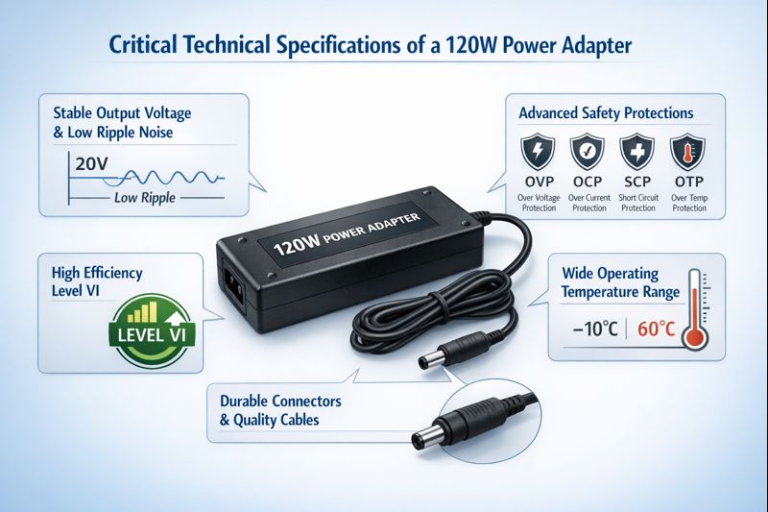
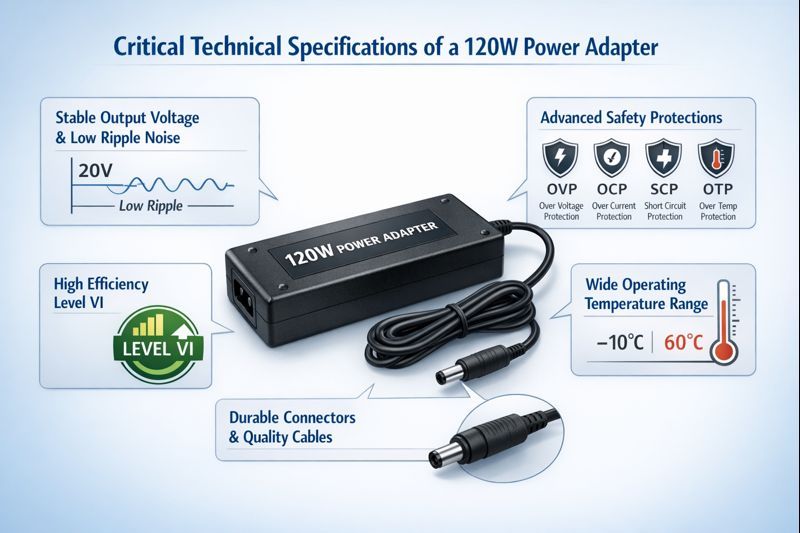
Illustration of a 120W power adapter highlighting key technical specifications including stable output voltage with low ripple noise, DOE Level VI high efficiency, advanced safety protections (OVP, OCP, SCP, OTP), wide operating temperature range from -10°C to 60°C, and durable connectors with quality cables.
When evaluating 120W power adapters, pay close attention to the following technical specifications:
Output Voltage Regulation and Ripple Noise: Stable voltage with minimal fluctuation and low ripple noise is essential to prevent device errors or damage.
Efficiency Standards: Adapters compliant with DOE Level VI or higher deliver higher efficiency, reducing energy waste and heat generation.
Thermal Management and Operating Temperature: Industrial and medical environments may expose adapters to extreme temperatures; units should be rated accordingly.
Electrical Protections: Features such as Over-Voltage Protection (OVP), Over-Current Protection (OCP), Short-Circuit Protection (SCP), and Over-Temperature Protection (OTP) safeguard both the adapter and the connected device.
Connector Standards and Cable Quality: Durable connectors and properly rated cables reduce signal loss and physical wear, critical for industrial and medical reliability.
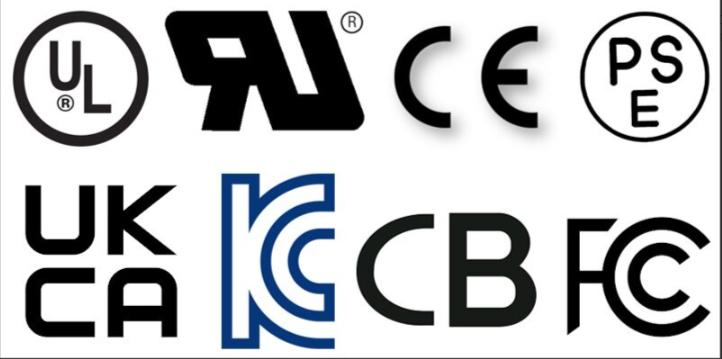
Compliance with industry standards ensures safety and regulatory approval. Key certifications to look for include:
UL and CE certifications for electrical safety.
IEC 60601 for medical-grade power adapters, ensuring patient safety.
FCC and EMC compliance to prevent electromagnetic interference.
RoHS for environmental safety compliance.
Medical-grade adapters often have stricter testing and certification requirements compared to general industrial adapters. Ensuring your adapter meets these standards is crucial, especially in healthcare settings.
Certified power adapter manufacturer XJK Power with UL CE FCC RoHS and global compliance approvals
More Info about Certifications, please refer our post.
Customization and OEM Considerations
Off-the-shelf adapters may not always meet specialized requirements. Customization options offered by manufacturers like XJK Power include:
Custom output voltages and current ratings.
Various connector types and cable lengths.
Branding and packaging tailored to your product.
Compliance documentation support.
Engaging with experienced manufacturers ensures your power solution integrates seamlessly and meets all regulatory demands. Understanding minimum order quantities (MOQs), lead times, and quality control processes is essential when considering OEM partnerships.
Environmental and Application Considerations
The operating environment dramatically affects adapter choice. Factors such as temperature extremes, humidity, dust, and vibration demand ruggedized designs. For instance:
Portable medical devices require lightweight, compact adapters with strict safety features.
Industrial automation may require adapters with high ingress protection ratings and wide temperature tolerance.
Proper selection and maintenance of power adapters enhance longevity and reduce downtime.
Common Challenges and How to Avoid Them
Typical pitfalls in selecting power adapters include:
Underestimating power needs, leading to unstable device performance.
Evaluate Suppliers: Quality, certifications, lead times, MOQ, support.
Pilot Testing: Validate adapter performance before full-scale deployment.
Conclusion and Next Steps
Selecting the right 120W power adapter is vital for ensuring your industrial or medical device operates reliably, safely, and efficiently. XJK Power’s customizable, high-quality 120W adapters are engineered to meet rigorous technical and regulatory standards.
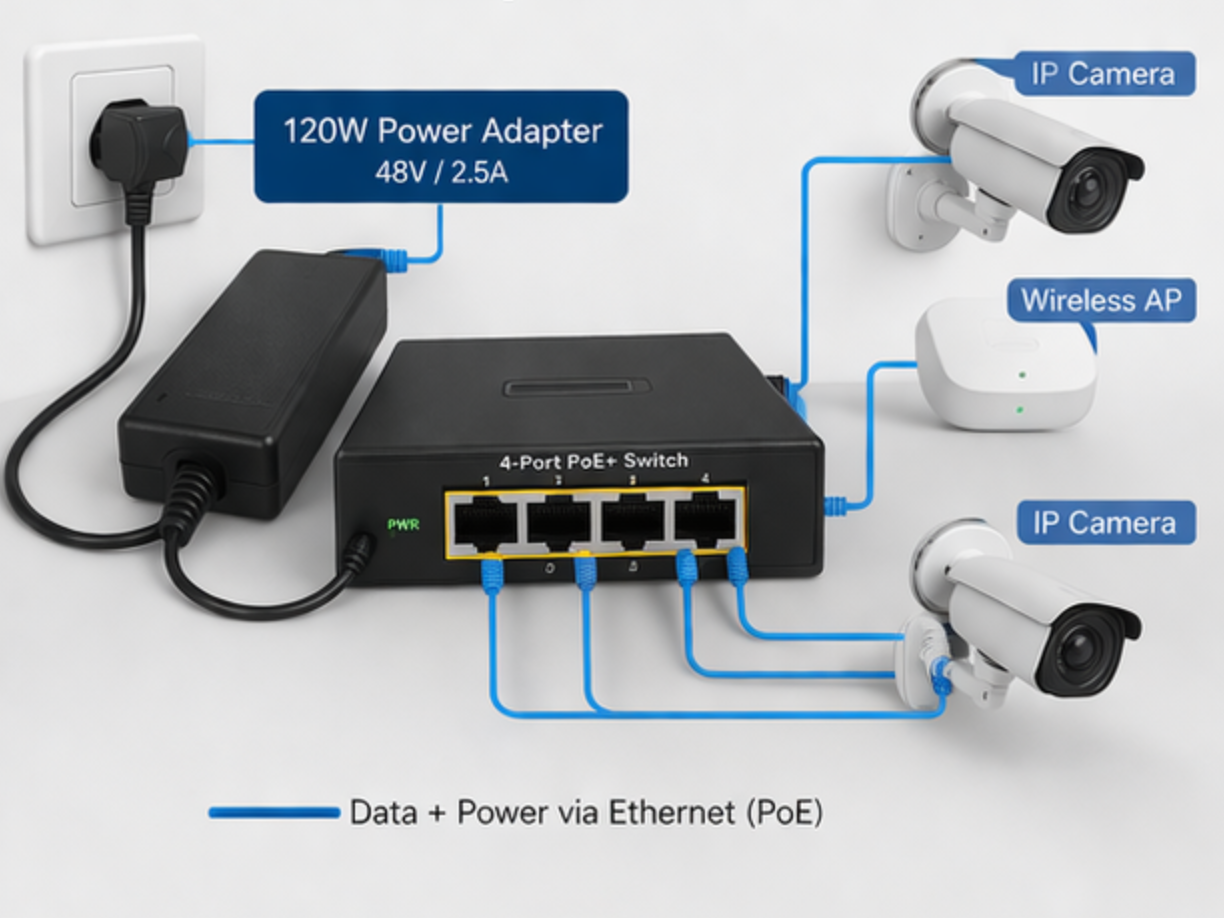
Explore a real-world case of a 120W 48V/54V power adapter for networking devices. See how it supports 4-port PoE+ switches, ensures stable operation, and meets efficiency and certification standards.