1. Power Budget and Load Margin
Selecting an external power adapter requires more than calculating the nominal voltage and current.
Engineers should identify all connected 24V DC loads and calculate their combined maximum operating demand.
The basic power calculation is:
P = V × I
For the selected adapter:
24V × 5A = 120W
The connected load should remain below the rated capacity under the expected operating conditions.
Additional capacity should be considered for startup current, simultaneous load operation, temperature derating and potential future expansion.
2. Output Voltage Stability
Industrial sensors and control devices require an appropriate DC voltage to operate reliably.
A regulated 24V DC output helps maintain consistent power delivery under changing load conditions.
The acceptable voltage range should be evaluated according to the input specifications of the connected equipment.
3. Electrical Protection
Industrial power adapters should incorporate appropriate protection functions to reduce risks associated with abnormal operating conditions.
Depending on the selected model, these may include:
- Overvoltage Protection (OVP)
- Overcurrent Protection (OCP)
- Short-Circuit Protection (SCP)
Protection requirements should be evaluated alongside the downstream circuit protection and wiring design.
4. Thermal Management
Power adapters installed inside industrial control cabinets must operate within their specified temperature limits.
Engineers should consider cabinet ventilation, ambient temperature, installation clearance and the adapter’s thermal characteristics.
Adequate thermal management helps maintain stable operation and supports long-term equipment reliability.
5. Independent Power Distribution
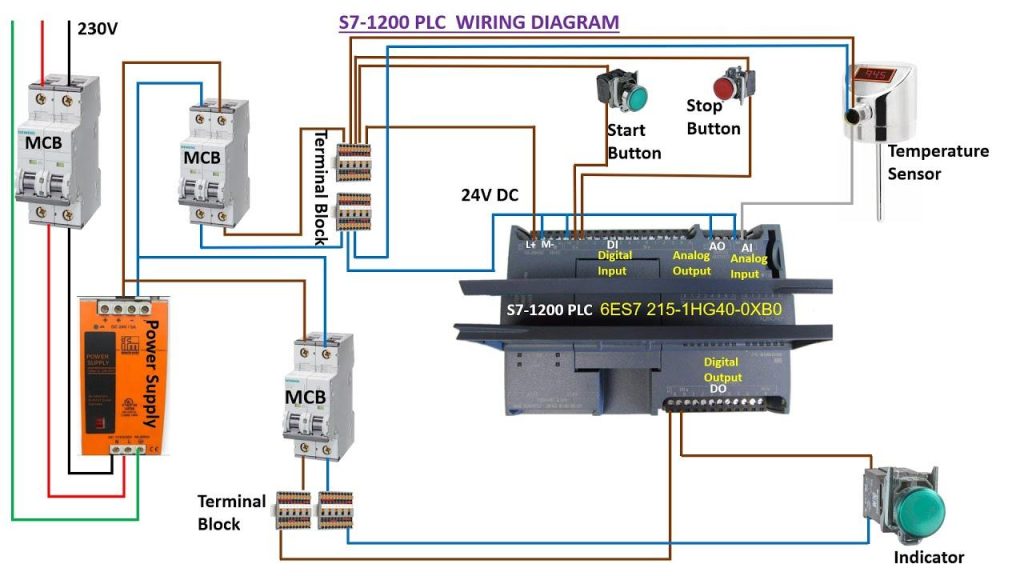
For the Siemens S7-1200 CPU 1214C AC/DC/Relay, the CPU’s main power input and external 24V DC power distribution must be considered separately.
The CPU’s integrated sensor supply should not be connected in parallel with an external 24V DC supply.
External power should be allocated to separate load points according to the system wiring design and the manufacturer’s installation guidance.