Home-Use Patient Monitoring Device Power Supply Solution: OEM Case Study

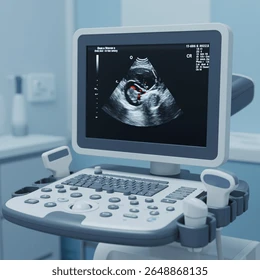
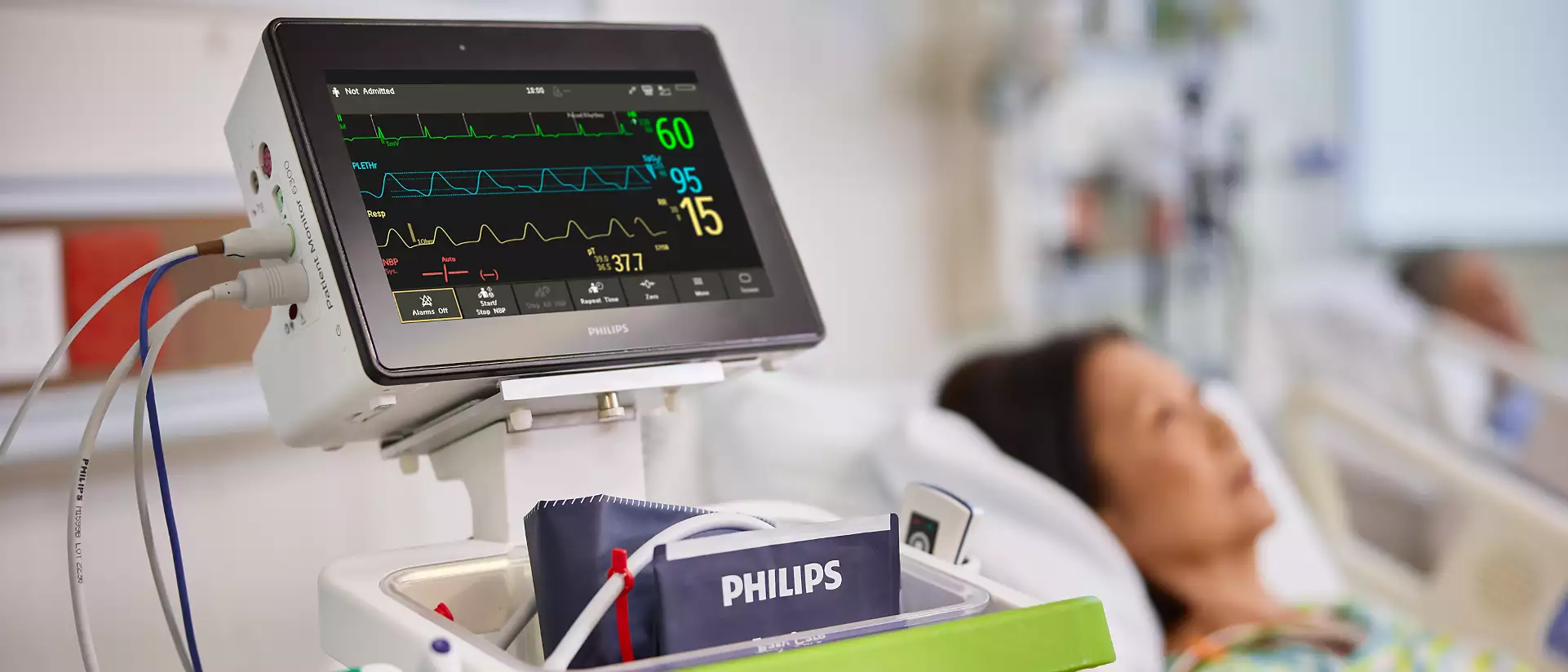
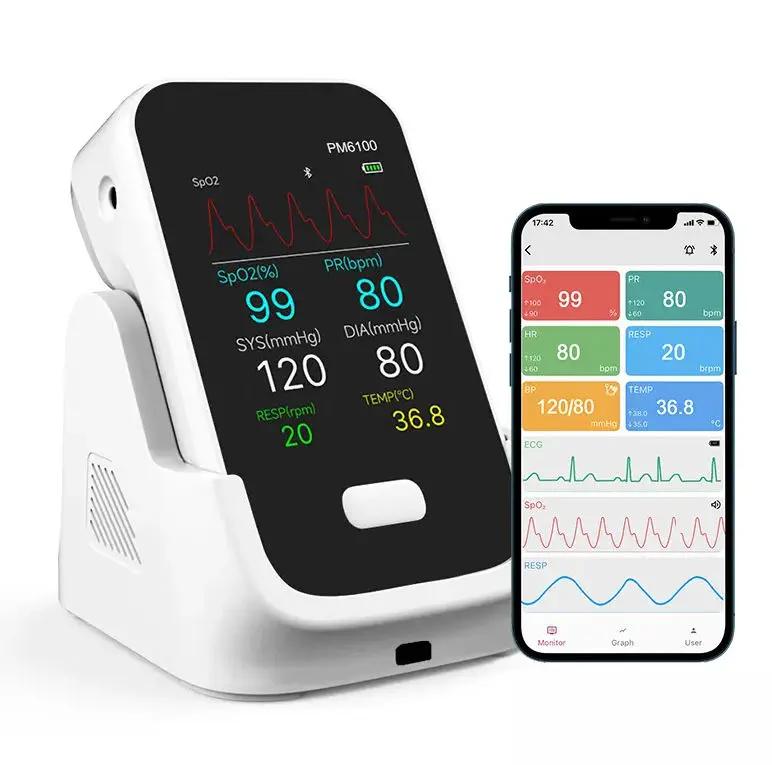
Home-use patient monitoring systems are becoming increasingly important in home healthcare, chronic disease management, elderly care, and remote patient monitoring applications. Unlike simple personal healthcare devices, these systems may integrate multiple monitoring functions, a larger display, data processing, wireless communication, alarms, and battery backup.

These functions place higher demands on the external power supply. The adapter needs to provide stable DC power during continuous or extended operation while also supporting changing loads caused by display activity, wireless communication, monitoring modules, alarms, and battery charging.

This case study describes a typical AC-DC power supply solution developed for a home-use patient monitoring system, focusing on power capacity, output stability, continuous operation, peak-load capability, EMC considerations, and OEM customization.

Project Overview

The customer was developing a multi-parameter patient monitoring system for home healthcare applications. The device was designed to allow users to monitor selected physiological parameters outside traditional clinical environments and support longer periods of observation.

Compared with simple healthcare testing devices such as digital thermometers or basic blood glucose meters, the monitoring system integrates multiple electronic modules within a single platform. These may include patient monitoring sensors, an embedded processor, LCD display, alarm functions, data storage, wireless communication, and an optional rechargeable battery.

The customer therefore required an external AC-DC power adapter capable of providing sufficient power for the complete system while maintaining stable operation under changing loads. The power supply also needed to accommodate the mechanical and connection requirements of the final product and support different regional plug configurations.

Item Requirement
Application Home-Use Patient Monitoring System
Device Type Multi-Parameter Patient Monitor
Customer Type Medical Device OEM
Power Supply Type External AC-DC Adapter
Input Voltage 100–240V AC
Output Voltage 12V DC
Typical Power 36–60W
Operating Mode Continuous / Extended Operation
Display Integrated LCD Display
Monitoring Functions SpO₂, ECG, Blood Pressure, Heart Rate, Temperature
Connectivity Bluetooth / Wi-Fi
Battery Optional Backup Battery
Key Requirements Stable output, continuous operation, peak-load capability
Customization Connector, cable, plug, labeling

Typical Power Architecture

Customer Challenge

1. Supporting Multiple Electronic Modules

The customer’s patient monitoring system combined several electronic functions within a single device.

Depending on the product configuration, the system could include:

  • Patient monitoring sensors
  • Embedded processor
  • LCD display
  • Memory and data processing
  • Alarm system
  • Bluetooth or Wi-Fi communication
  • Battery charging circuitry

Each module can have a different power profile. Some functions may operate continuously while others introduce short-duration increases in power consumption.

The power adapter therefore needed to provide sufficient output capacity while maintaining stable DC voltage as the system load changed.

2. Continuous and Extended Operation

Home patient monitoring systems may operate for extended periods, particularly when used for overnight observation, chronic disease management, or remote monitoring.

This places greater emphasis on long-term power supply performance than applications that operate for only a few minutes at a time.

The adapter design therefore needed to consider:

  • Continuous load operation
  • Thermal performance
  • Component reliability
  • Output regulation
  • Power derating
  • Long-duration operating stability

Selecting an adapter based only on the device’s average power consumption could leave insufficient capacity during periods of higher demand.

3. Peak Load Capability

The system’s instantaneous power requirement can increase when several functions operate simultaneously.

For example, higher power demand may occur when:

  • The display is active at higher brightness
  • Wireless data is being transmitted
  • Multiple monitoring modules are operating
  • An alarm is activated
  • The battery is charging while the system is operating

For this reason, the adapter should be selected according to the system’s maximum expected operating condition rather than its typical average consumption.

Adequate power margin also provides greater flexibility for future hardware revisions or additional system functions.

4. Battery Backup Integration

Some home patient monitoring systems incorporate a rechargeable battery to maintain operation when AC power is temporarily unavailable or to provide portability.

When the AC adapter is connected, it may need to support both the active system and battery charging.

For example, if the monitoring system requires approximately 30–35W during operation and the battery charging circuit requires an additional 10–15W, the adapter needs sufficient capacity to support the combined load.

A 60W adapter can therefore provide a practical power platform for systems with moderate operating consumption and integrated battery charging, subject to the actual load profile and required design margin.

5. EMC and System Reliability

Patient monitoring systems may contain sensitive measurement circuits and wireless communication modules. The power supply therefore needs to be designed with electromagnetic compatibility and electrical noise performance in mind.

Important considerations include:

  • Conducted emissions
  • Radiated emissions
  • Output ripple and noise
  • Input filtering
  • Output filtering
  • Switching circuit layout
  • DC cable configuration

Power supply EMC performance should ultimately be evaluated together with the complete end product because the adapter, DC cable, internal electronics, enclosure, grounding, and system architecture can all influence the final EMC performance.

XJK Engineering Solution

Parameter Typical Configuration
Input Voltage 100–240V AC
Input Frequency 50/60Hz
Output Voltage 12V DC
Output Current 5A
Rated Power 60W
Output Type Regulated DC
Operating Mode Continuous
DC Connector Customized
Cable Length Customized
AC Plug EU / US / UK / AU
Protection OVP / OCP / SCP / OTP
Safety According to final device requirements
EMC According to applicable requirements

How We Develop a Custom Power Supply

Our engineering process helps  device manufacturers move efficiently from requirement definition to production-ready power solutions.

Step1
Requirement
Review

Review voltage, current, connector, plug type, installation environment, and medical device requirements.

Step2
Engineering
Evaluation

Electrical feasibility assessment, connector matching, and product configuration planning.

Step3
Prototype
Development

Prototype recommendation or customized sample preparation based on project requirements.

Step4
Compliance &
Validation

Review safety expectations, EMC considerations, and application-specific requirements.

Step5
Sample
Approval

Functional verification and customer-side evaluation before production.

Step6
Production &
Delivery

OEM production support for customized healthcare power solutions.

Technical Design Considerations

1. Output Power Capacity

The adapter’s rated output power should be selected according to the maximum expected system demand rather than average power consumption.

The OEM should evaluate:

  • Maximum continuous load
  • Startup current
  • Peak system load
  • Display consumption
  • Communication activity
  • Sensor operation
  • Alarm conditions
  • Battery charging power
  • Internal conversion losses

A suitable power margin helps prevent the adapter from operating continuously at its maximum rated capacity and provides additional flexibility for changing system conditions.

For a typical home patient monitoring system, a 60W adapter can provide a practical balance between power capacity and physical size.

2. Output Voltage Stability

Stable DC output is essential for the reliable operation of processors, displays, monitoring modules, and communication circuits.

The adapter should maintain its specified output voltage across the expected input voltage and load range.

Good output regulation and transient response can help reduce the risk of:

  • System resets
  • Display instability
  • Communication interruptions
  • Abnormal operation during load transitions

The final power architecture should also consider the characteristics of the internal DC-DC converters and individual system voltage rails.

3. Continuous Operation

Because home patient monitoring systems may operate for extended periods, the adapter needs to be evaluated for long-duration operation.

Important engineering considerations include:

  • Thermal performance
  • Component temperature
  • Power derating
  • Transformer and switching component design
  • Enclosure ventilation
  • Long-term output stability

The adapter should be selected and tested according to the intended operating environment and expected duty cycle of the final product.

4. Peak Load Response

The power demand of a monitoring system is not always constant.

Short-term increases can occur when the display, wireless communication, monitoring modules, alarm functions, and battery charging operate at the same time.

The power supply should therefore have adequate transient response and output capacity to handle expected load changes without excessive voltage deviation.

For OEM development, measuring the actual system load under different operating modes is recommended before finalizing the adapter specification.

5. EMC Performance

EMC is an important consideration when the power supply is used with electronic measurement and communication equipment.

The power adapter should be designed to control unwanted electrical noise through appropriate circuit topology, filtering, PCB layout, transformer design, and output filtering.

System-level EMC testing should be performed using the final adapter, cable, and end device because the complete configuration can influence the final test results.

6. Connector and Cable Configuration

The DC interface between the power adapter and monitoring device must be compatible with the final mechanical design.

OEM customization may include:

  • DC connector type
  • Connector polarity
  • Locking connector
  • Cable length
  • Cable gauge
  • Strain relief
  • AC plug configuration
  • Product labeling

For products intended for multiple international markets, different AC plug configurations can also be provided while maintaining the same basic power architecture.

Project Result

The power solution provided:

  • Sufficient capacity for multiple monitoring functions
  • Stable regulated DC output
  • Support for continuous operation
  • Capacity for peak system loads
  • Support for optional battery charging
  • Customized connector and cable configuration
  • Regional plug flexibility

By selecting an adapter based on maximum system demand rather than average power consumption, the OEM could maintain sufficient power margin for simultaneous monitoring, display operation, wireless communication, and battery charging.

Recommended Products

24W Medical Power Adapter

The XJK 24W medical power adapter is a compact AC-DC external power supply designed for medical and healthcare equipment requiring a stable 12V DC output at up to 2A.

60W Desktop Medical Power Adapter 15V 4A

The 60W Desktop Medical Power Adapter (15V 4A) is engineered to provide dependable and medically compliant power for healthcare equipment operating in hospitals, clinics, laboratories, and home healthcare environments.

FAQ

What power supply is required for a home patient monitoring system?

The required power supply depends on the number of monitoring modules, display size, communication functions, alarm system, battery charging requirements, and overall system architecture.

Compact home patient monitoring systems may use power adapters in the range of approximately 18W to 60W or higher. The final rating should be determined from the device’s maximum operating load and appropriate design margin.

Why does a patient monitoring system require more power than a simple healthcare testing device?

A patient monitoring system may operate several functions simultaneously, including multiple sensors, an LCD display, processor, wireless communication, alarms, and battery charging.

These additional functions can increase both continuous and peak power consumption compared with simpler devices such as digital thermometers or basic blood glucose meters.

Can one AC-DC adapter power the monitor and charge its battery?

Yes, depending on the system architecture.

When the adapter powers the monitoring system while simultaneously charging the internal battery, the adapter must provide sufficient capacity for both loads.

The required rating should therefore be calculated based on the maximum system load plus the battery charging requirement, with an appropriate design margin.

Can the power adapter for a home patient monitor be customized?

Yes. OEM power adapters can be customized to match the electrical and mechanical requirements of the final monitoring system.

Common options include output voltage, output current, power rating, DC connector, connector polarity, cable length, AC plug type, enclosure configuration, labeling, and packaging.

Looking for a Power Supply for Your Home Patient Monitoring System?

Selecting a power adapter for a patient monitoring system requires more than matching the nominal voltage and wattage. The solution should also consider maximum system load, peak power demand, battery charging, continuous operation, EMC performance, connector configuration, and the regulatory requirements of the final device.

XJK Power provides customized AC-DC power adapter solutions for home-use healthcare equipment and OEM applications.

Share your required output voltage, current, connector type, cable length, and device power requirements with our engineering team to discuss a suitable power supply solution.

Related Resources

Request a Quote

Leave your requirements and we’ll get back to you within 24 hours.