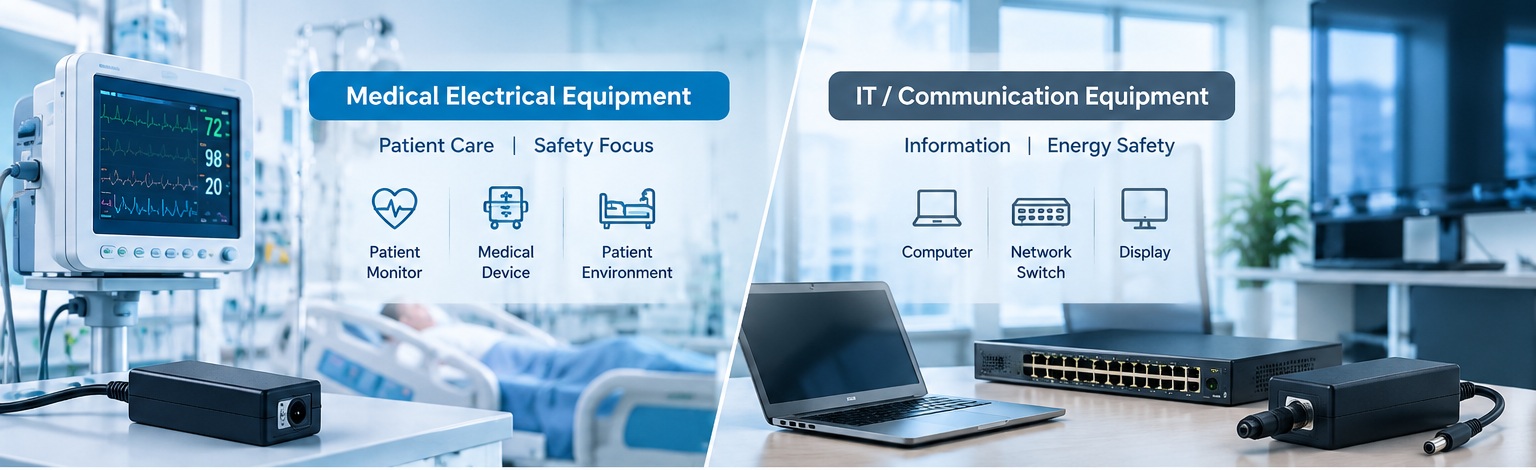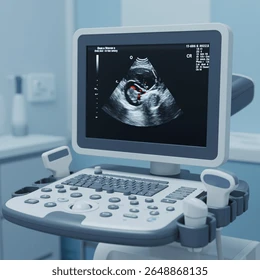
Power supplies are the foundation of every electronic device. Whether used in medical equipment, industrial automation systems, networking devices, POS terminals, or consumer electronics, reliability starts with a well-controlled manufacturing process.
At XJK Power, we specialize in OEM and ODM AC/DC power adapters for global equipment manufacturers. From circuit design and component selection to final testing and shipment, every stage follows strict quality control procedures to ensure safety, performance, and long-term reliability.
In this article, we take you inside our manufacturing process and show how every power adapter is built before it reaches our customers.
Step 1: Engineering and Circuit Design
Every project begins with engineering.
Our design team works closely with customers to understand application requirements, including output voltage, output current, power rating, efficiency targets, environmental conditions, and certification requirements.
During the design stage, engineers focus on:
- Electrical performance
- Energy efficiency
- Thermal management
- EMC compliance
- Safety isolation design
- Product lifetime and reliability
For projects serving medical equipment, industrial automation, networking devices, and commercial systems, the design must also comply with applicable international safety standards.
A reliable power adapter starts with a reliable design.
Step 2: Component Selection and Material Sourcing
The quality of a power supply depends heavily on the quality of its components.
To ensure stable performance and long service life, we carefully select components from qualified suppliers and verify that materials meet project requirements.
Key components include:
- Electrolytic capacitors
- Transformers
- MOSFETs
- Controllers
- Protection circuits
- Connectors and cables
For certified projects, all components must comply with the relevant safety and regulatory requirements before entering production.
This helps ensure consistency, safety, and long-term product reliability.
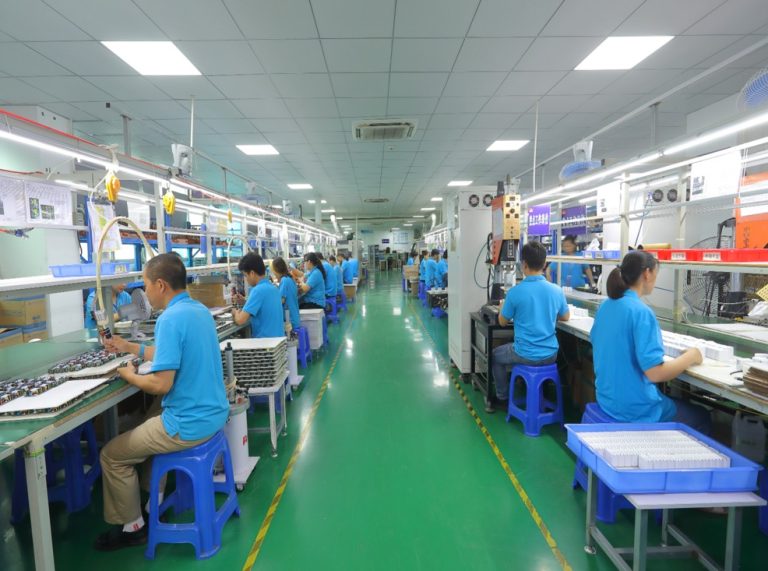
Step 3: Incoming Inspection and PCB Assembly
Before production begins, all incoming materials undergo inspection by our quality control team.
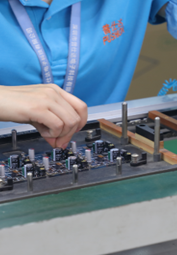
After approval, PCB assembly starts through multiple manufacturing processes:
SMT Assembly
Surface-mount components are placed automatically using high-speed SMT equipment.
AOI Inspection
Automated Optical Inspection verifies component placement and solder quality.
DIP Assembly
Through-hole components are installed where required.
Soldering Process
Professional soldering procedures ensure strong electrical and mechanical connections.
Each stage is monitored to minimize manufacturing defects and maintain product consistency.
Step 4: Electrical Performance Testing
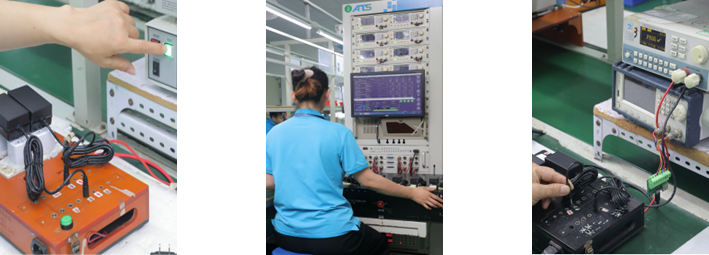
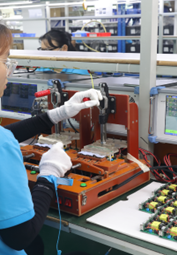
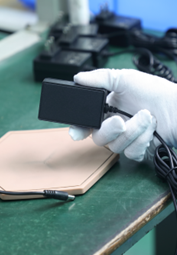
After assembly, every power adapter undergoes functional testing.
Our testing procedures verify:
- Output voltage accuracy
- Rated current performance
- Full-load operation
- Efficiency performance
- Ripple and noise levels
- Short-circuit protection
- Over-current protection
- Over-voltage protection
These tests help ensure that every unit performs according to specification before moving to the next stage.
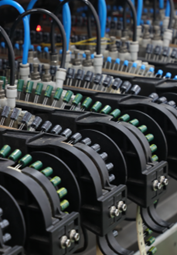
Step 5: Burn-In Aging Test
Long-term reliability is critical for professional applications.
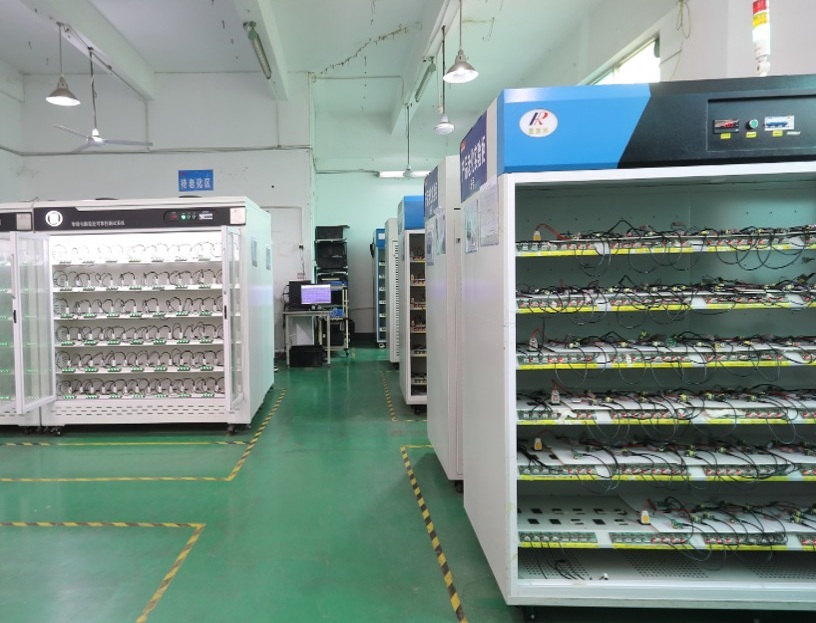
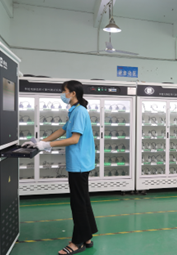
To identify potential early-life failures, products undergo burn-in testing under controlled operating conditions.
The aging process helps verify:
- Stable operation over time
- Thermal performance
- Component reliability
- Consistent output characteristics
This additional screening process reduces the possibility of field failures and improves overall product quality.
Step 6: Safety Verification
Safety testing is one of the most important stages in power supply manufacturing.
Each product must pass strict safety verification procedures, including:
- Hi-Pot testing
- Insulation testing
- Leakage current testing
- Ground continuity testing
- Protection function verification
These tests help ensure compliance with international safety standards and customer requirements.
For medical and industrial projects, safety performance is particularly important because equipment often operates continuously in demanding environments.
Step 7: Final Inspection, Packaging, and Shipment
Before shipment, finished products undergo final quality inspection.
The inspection includes:
- Appearance verification
- Functional verification
- Label checking
- Packaging inspection
Products are then securely packaged to protect them during international transportation.
For OEM and ODM projects, customized labels, logos, packaging, and documentation can also be provided according to customer requirements.
Why Global OEM Customers Choose XJK
More Than 20 Years of Experience
Since 2004, XJK has been providing power supply solutions for manufacturers across multiple industries.
Dedicated Manufacturing Facility
Our production facility is equipped with specialized assembly, testing, and quality control systems to support stable manufacturing operations.
OEM and ODM Capability
We support customized power adapters with:
- Custom output voltage and current
- Custom connectors
- Cable customization
- Branding and labeling
- Packaging customization
Global Certification Support
We support projects requiring certifications such as:
- CE
- FCC
- UL
- CB
- UKCA
- PSE
- KC
- IEC 62368-1
- IEC 60601-1
Strict Quality Control
Every production batch follows standardized inspection and testing procedures before shipment.