Introduction
In modern healthcare equipment design, external power adapters are widely used to ensure safety, flexibility, and compliance. Among various voltage options, 19V DC has become a common standard for many medical devices.
But why do so many systems—from patient monitors to portable medical workstations—use 19V instead of 12V or 24V?
This article explains the engineering logic behind 19V power adapters in medical applications.
The Origin of 19V: Embedded Computing Platforms
The most important reason is:
👉 Many medical devices are built on embedded computing architectures
Examples include:
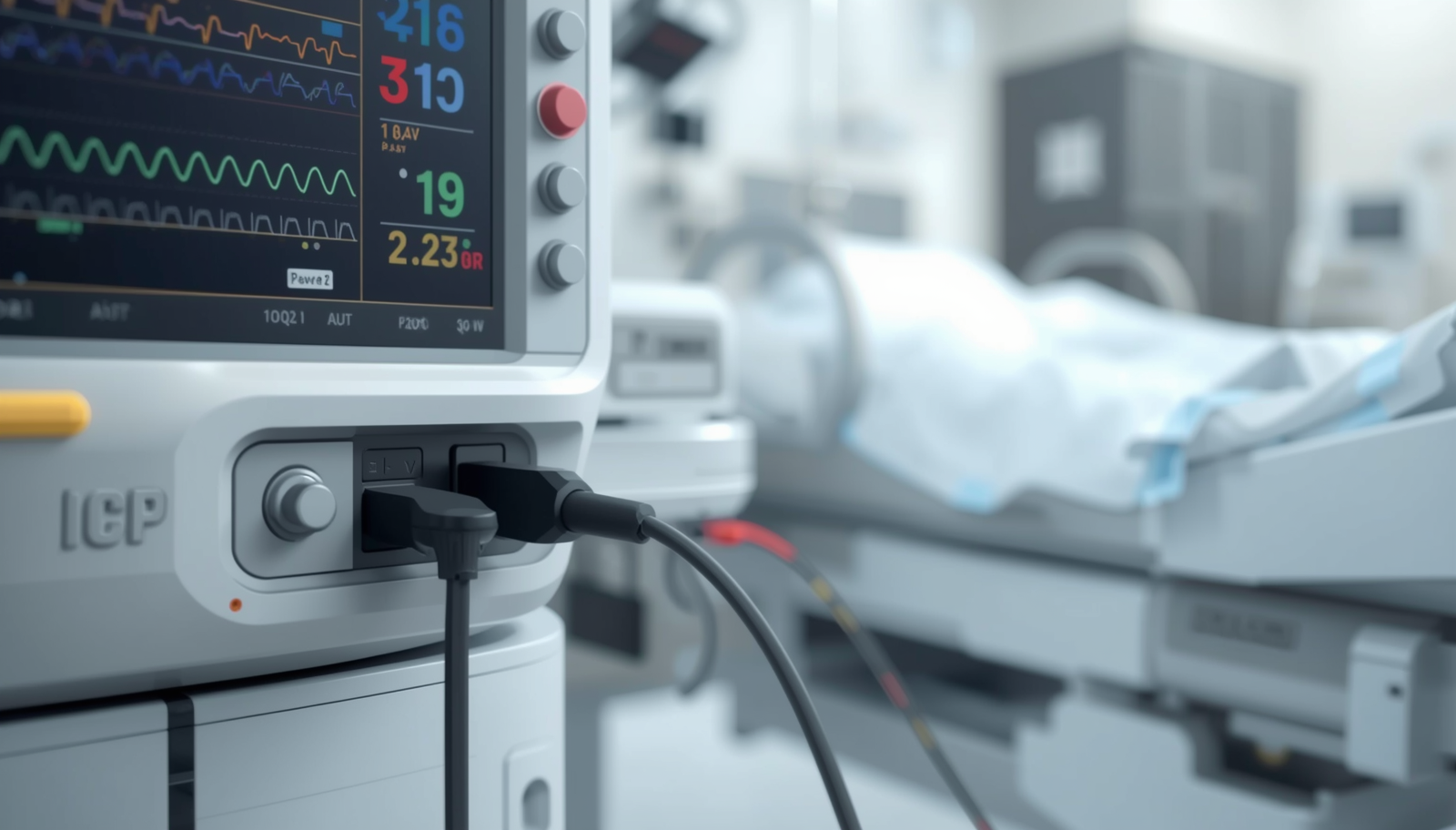
- Patient monitoring systems
- Medical displays
- Portable diagnostic devices
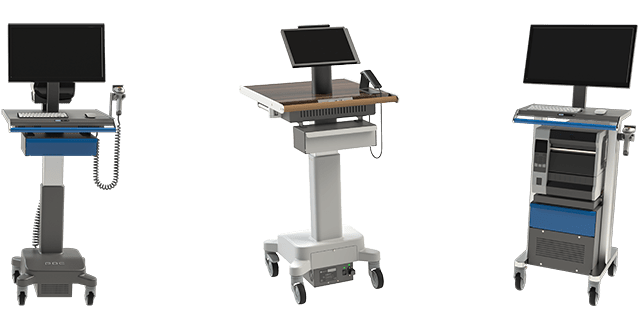
- Medical carts with integrated PCs
These systems often use:
- Industrial motherboards
- Laptop-derived power architectures
👉 And these platforms are typically designed for 19V DC input
Compatibility with Existing Power Ecosystem
Using 19V provides strong compatibility advantages:
✔ Standardized Power Input
19V is widely used in:
- Laptops
- Industrial PCs
- Embedded systems
👉 This allows engineers to reuse existing designs and components.
✔ Mature Supply Chain
- Readily available adapters
- Lower development cost
- Faster time-to-market
Power vs Current Optimization
Compared to lower voltages like 12V:
- At same power (e.g., 120W)
- 19V requires lower current
👉 Example:
- 12V → 10A
- 19V → ~6.3A
✔ Benefits:
- Reduced cable losses
- Smaller connectors
- Lower heat generation
Safety Advantages in Medical Applications
Safety is the most critical factor in medical device design.
✔ External Power Architecture
Using a 19V external adapter allows:
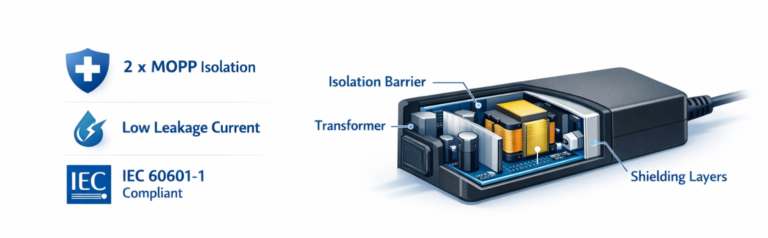
- Separation of AC mains from the device
- Easier compliance with IEC 60601-1
- Reduced internal high-voltage risk
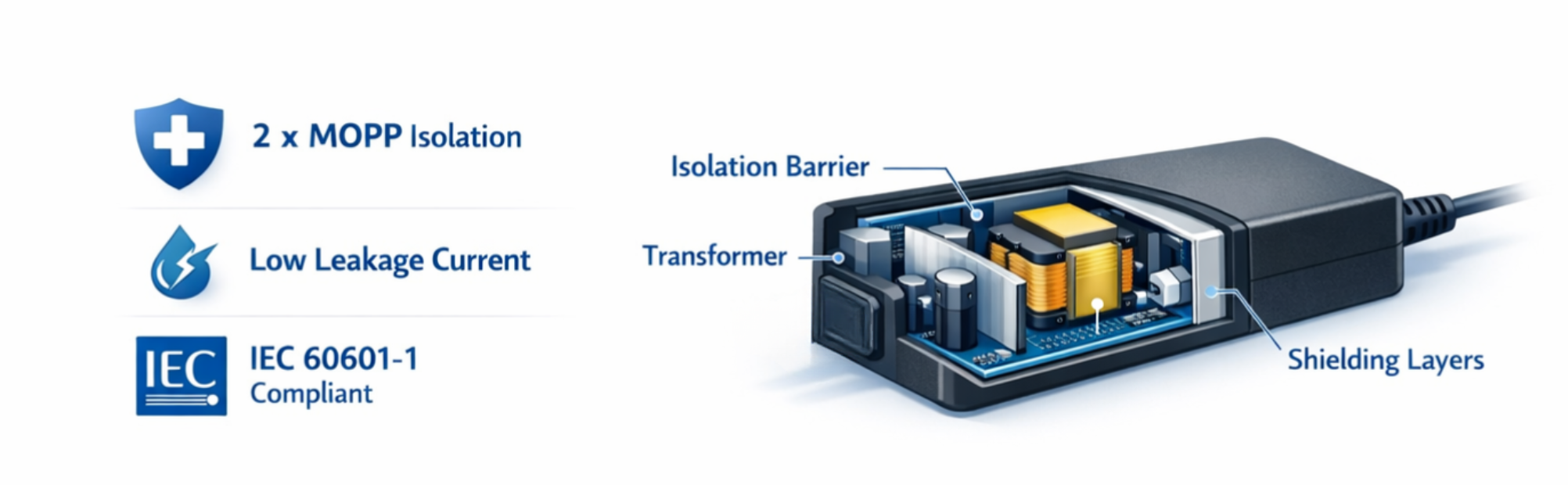
✔ Lower Internal Voltage Risk
Compared to internal AC-DC designs:
- 19V DC is safer to manage inside equipment
- Simplifies insulation design
Thermal Management Benefits
Medical devices often run 24/7, especially in:
- ICUs
- Operating rooms
- Monitoring stations
Using an external 19V adapter:
- Moves heat outside the device
- Improves system reliability
- Reduces cooling requirements
Typical Medical Devices Using 19V Adapters
Common applications include:
1. Patient Monitoring Systems

2. Portable Medical Workstations
- Medical carts
- Nursing stations
3. Medical Displays
- Diagnostic monitors
- Surgical displays
4. Embedded Medical Controllers
- Imaging system control units
- Data acquisition systems
Why Not 12V or 24V?
12V Limitations:
- Higher current at high power
- More heat and cable loss
24V Limitations:
- Less compatible with embedded systems
- Higher voltage stress on components
👉 19V is a balanced compromise between efficiency, safety, and compatibility
Recommended Solution
For devices requiring stable and compliant power:
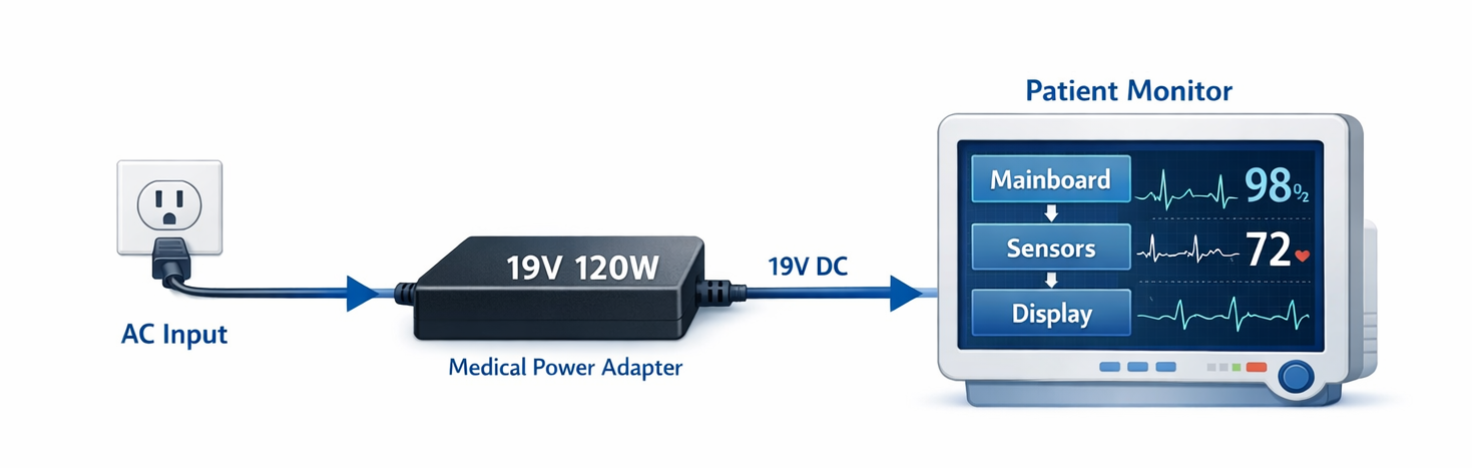
👉 19V 6.3A medical power adapter
- 120W output
- IEC 60601 compliant
- Designed for continuous operation
FAQ
1. Is 19V a standard voltage for medical devices?
Yes, especially for devices based on embedded computing systems.
2. Why not use 12V in medical devices?
12V requires higher current for the same power, leading to more heat and losses.
3. Are 19V power adapters safe for medical use?
Yes, when designed to meet IEC 60601 standards.
4. Can 19V adapters support high-power devices?
Yes, up to 120W or more depending on the design.
Conclusion
The widespread use of 19V power adapters in medical devices is not accidental. It is the result of engineering trade-offs between compatibility, efficiency, safety, and system design.
For manufacturers, choosing a reliable medical-grade 19V adapter ensures both compliance and long-term performance.