Introduction
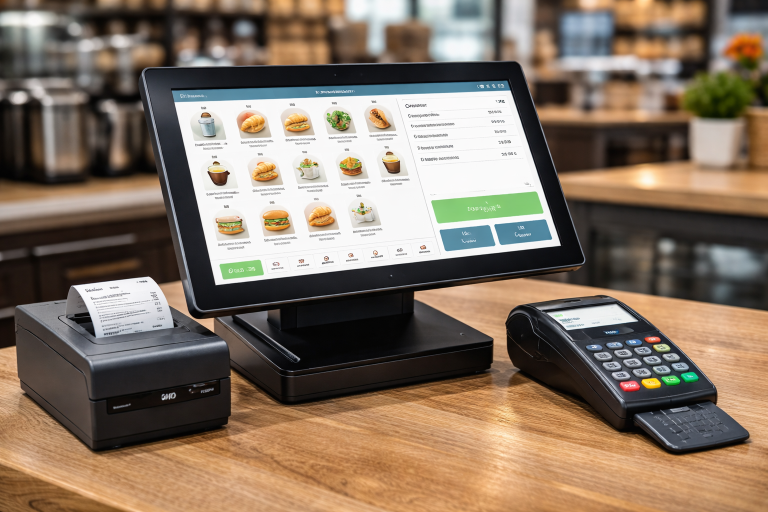
In modern retail environments, POS systems and self-service kiosks are expected to operate reliably for long hours, often 12 to 24 hours per day. These systems are no longer simple terminals—they integrate multiple modules such as touch displays, barcode scanners, payment processors, and thermal printers.
From a power design perspective, this creates a demanding scenario. Unlike consumer electronics with relatively stable loads, POS and kiosk systems experience dynamic power fluctuations depending on real-time usage. As a result, selecting a reliable 120W power adapter for POS systems is not just about wattage—it is about ensuring stability under real operating conditions.
Selecting a reliable 120W power adapter for POS systems
Customer Background
The customer is a system integrator specializing in POS terminals and self-service kiosk solutions for retail chains and quick-service restaurants. Their systems are deployed in high-traffic environments where even short downtime can affect transaction flow and customer satisfaction.
In previous deployments, they encountered intermittent system instability, particularly during peak usage hours. While the issue was not immediately obvious, it was eventually traced back to insufficient power headroom in the existing adapter design.
Application Scenario
The system configuration included several key components:
POS Terminal Systems
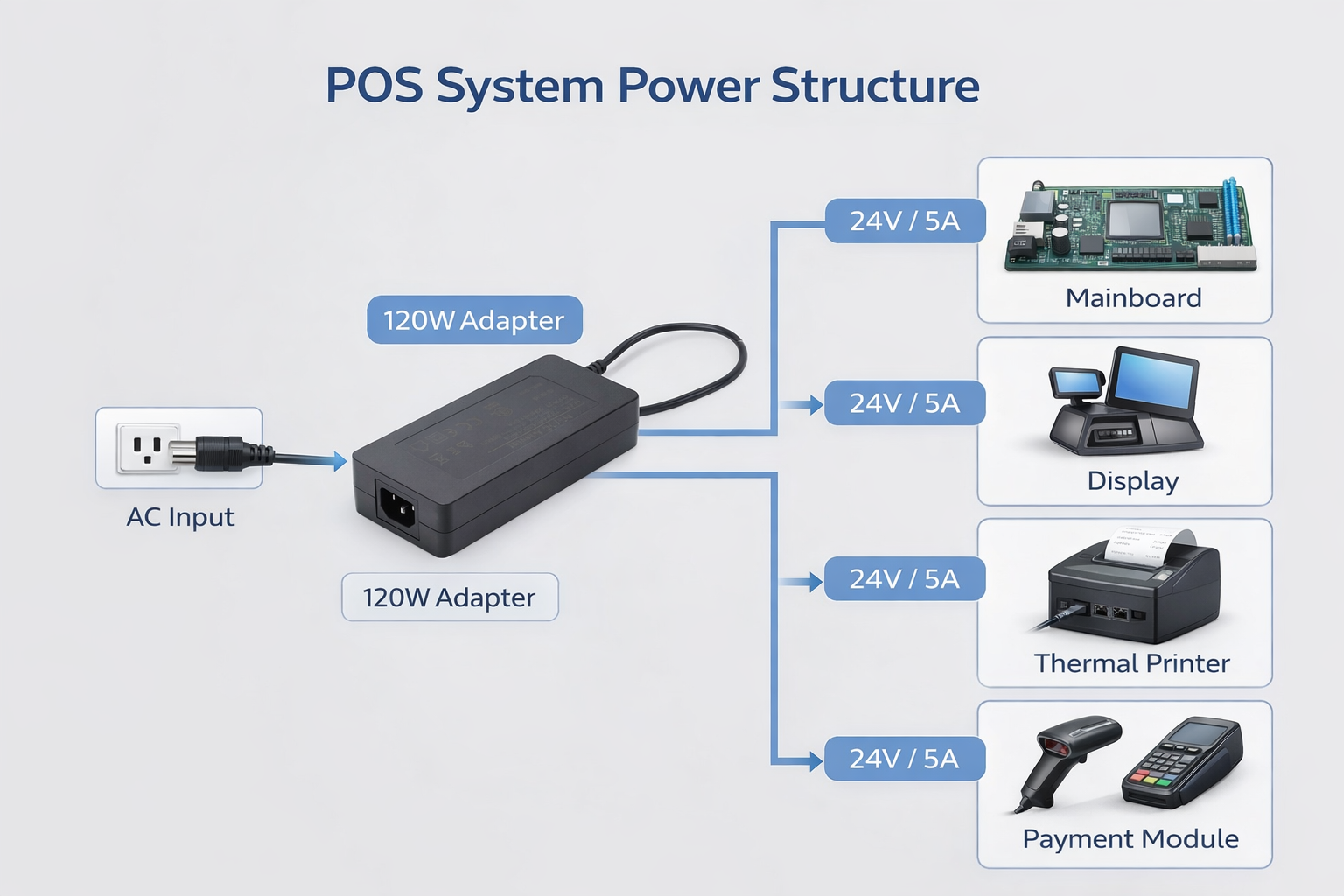
Each unit integrates a mainboard, touchscreen display, barcode scanner, and payment module. These components run continuously during operation and require stable voltage to maintain responsiveness.
Self-Service Kiosks
The kiosks include larger displays, embedded computing systems, and thermal printers. Due to their enclosed structure, internal heat buildup is a known constraint.
Peripheral Devices
Additional devices such as receipt printers and customer-facing displays further increase power demand, especially during peak transaction periods.
In real-world deployment, these systems are rarely idle. Instead, they operate under fluctuating loads throughout the day.
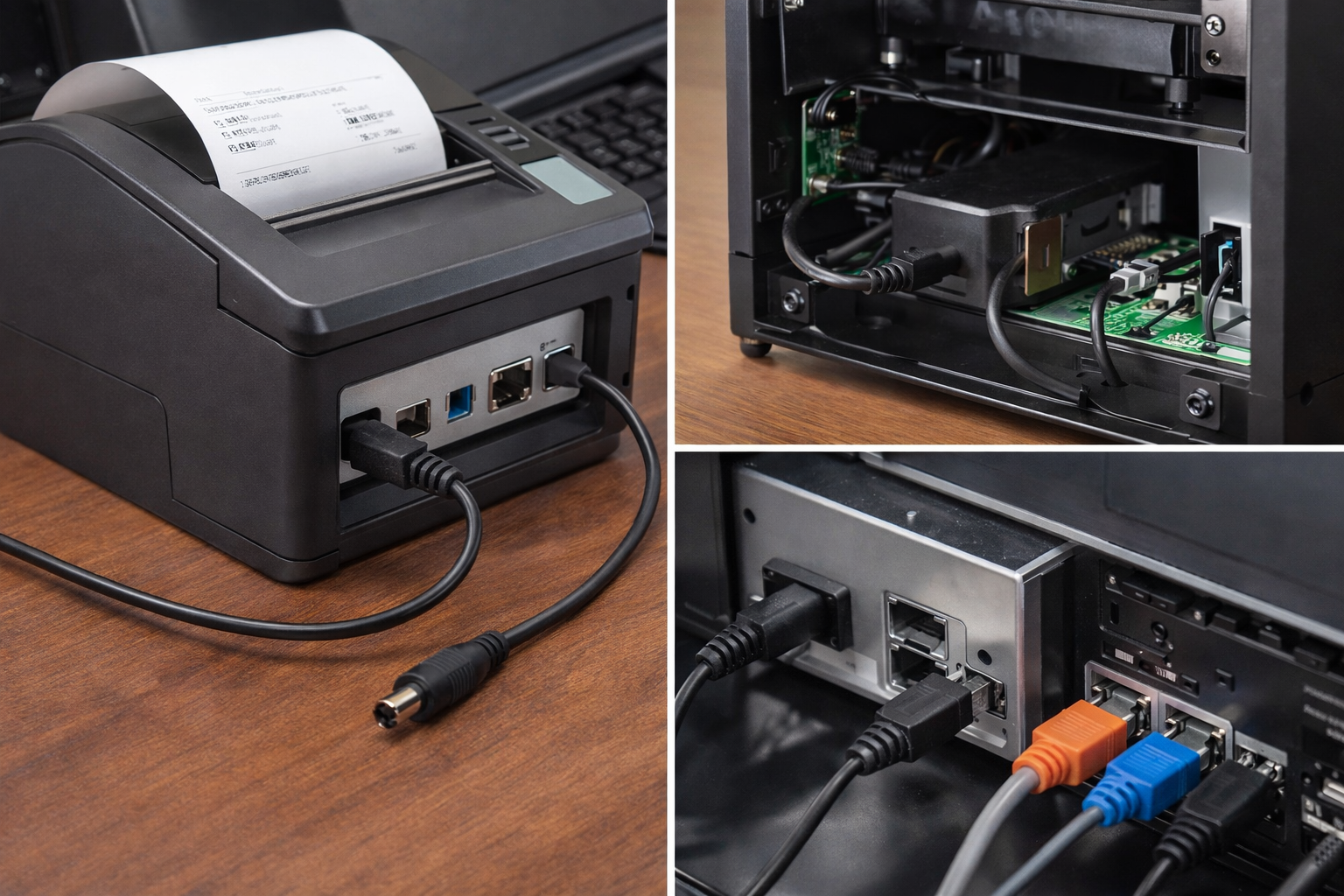
Power Consumption Analysis (Real-World Load Behavior)
To better understand the power requirements, a typical system load was analyzed:
-
- POS main unit: 25–40W
-
- Touch display: 20–30W
-
- Thermal printer: 20–40W (during printing peaks)
-
- Scanner and peripherals: 10–20W
Typical operating load: 70–90W
Peak load range: 90–120W
However, what matters in practice is not just the average load.
In real deployments, one common scenario occurs when a thermal printer starts printing while the display is active and a payment transaction is being processed. At that moment, the system experiences a short but significant increase in power demand.
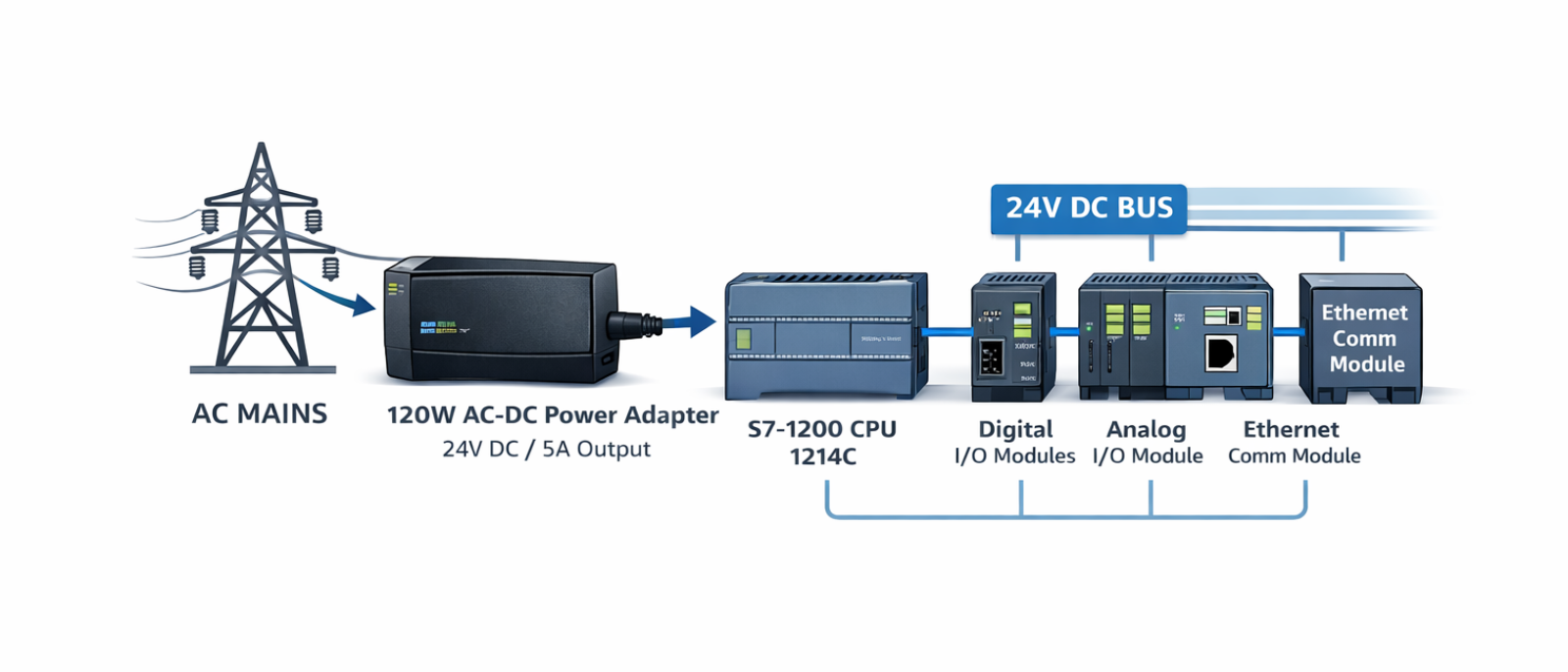
For similar industrial applications, see our PLC power supply case study.
In several projects we have worked on, this type of transient load caused lower-rated adapters (such as 60W or 90W) to operate near or beyond their limits, leading to voltage drops or system instability.
Technical Challenges Observed
Based on field experience, the following challenges were identified:
1. Voltage Instability Under Peak Load
When the adapter operates close to its maximum capacity, output voltage can fluctuate during transient loads, affecting system performance.
2. Thermal Constraints in Enclosed Designs
Kiosk structures often have limited airflow. Heat generated by both the adapter and internal electronics can accumulate, reducing overall reliability.
3. Continuous Operation Requirements
Unlike office equipment, POS systems often run all day without shutdown cycles. This places additional stress on power components.
4. Dynamic Load Conditions
Power demand is not constant. Devices such as printers introduce sudden load changes that must be handled without affecting system stability.
5. Space Limitations
Compact industrial design requires a power solution that is both efficient and physically compact.
These challenges are common across many industrial power supply applications.
Solution: 120W AC-DC Power Adapter
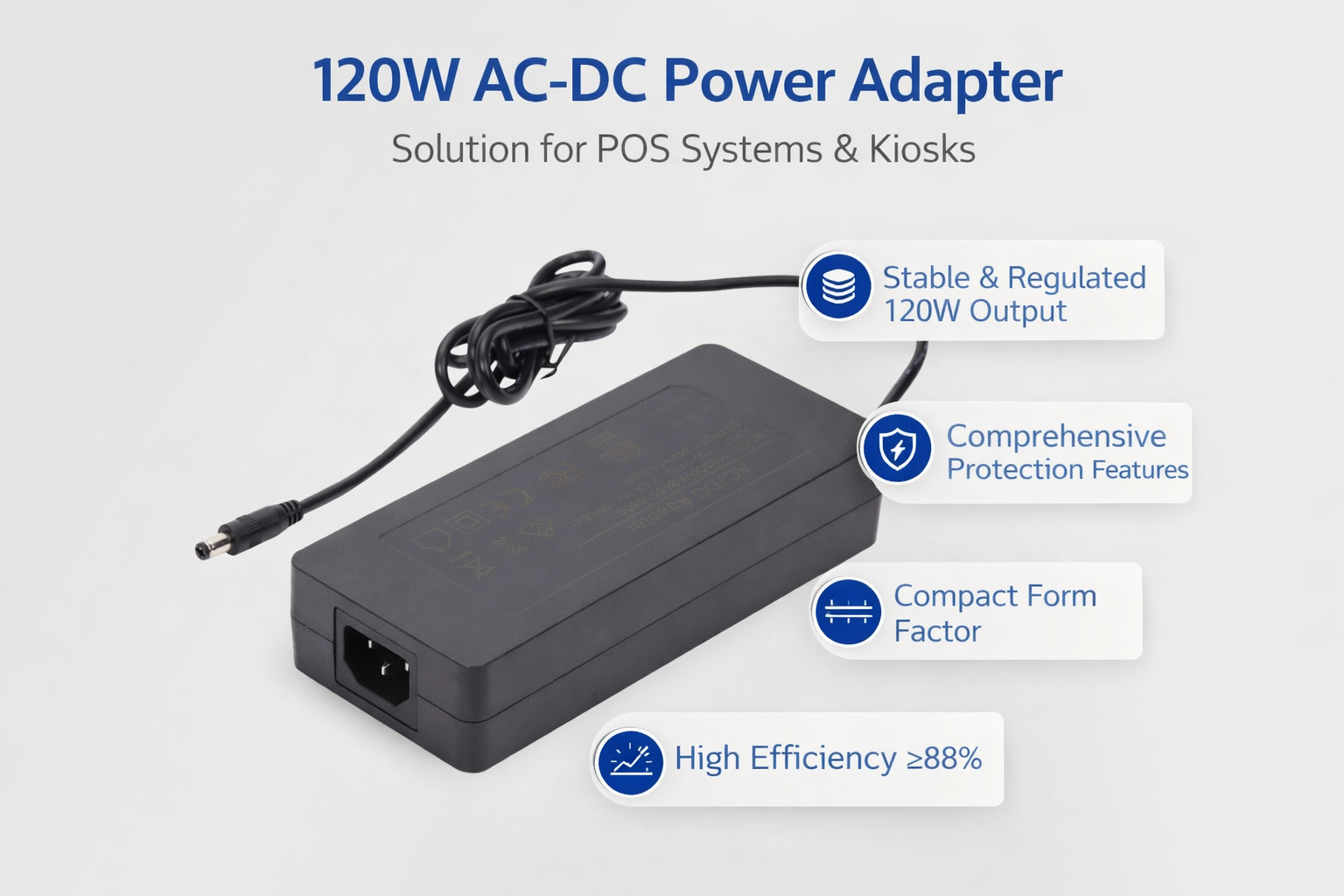
To address these challenges, a 120W AC-DC power adapter was selected and integrated into the system.
Sufficient Power Headroom
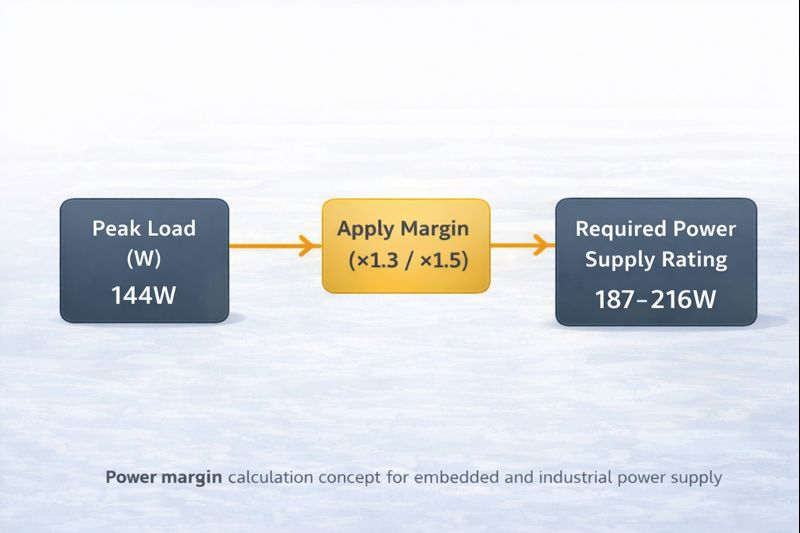
Instead of operating near full capacity, the adapter typically runs at 60–80% load under normal conditions. This provides enough margin to handle transient peaks without instability.
Stable and Regulated Output
The adapter delivers consistent DC output with low ripple and noise, which is critical for sensitive components such as touch controllers and payment modules.
Improved Thermal Performance
With efficiency ≥88%, the adapter generates less heat compared to lower-efficiency designs. This is especially important in enclosed kiosk environments.
Protection Mechanisms for Reliability
The system includes:
-
- Over-voltage protection (OVP)
-
- Over-current protection (OCP)
-
- Short-circuit protection (SCP)
These protections help prevent damage under abnormal operating conditions.
Compact Integration
The adapter’s form factor allows flexible installation within space-constrained POS and kiosk systems.
Why 120W is the Optimal Choice (Engineering Perspective)
Selecting the correct power rating is a balance between performance, reliability, and cost.
From an engineering standpoint:
-
- Using a lower wattage adapter (60W–90W):
May appear sufficient based on average load, but lacks margin for peak conditions. This often leads to instability over time.
- Using a lower wattage adapter (60W–90W):
-
- Using a significantly higher wattage adapter (>150W):
Provides excess capacity but increases cost, size, and thermal footprint without clear benefit.
- Using a significantly higher wattage adapter (>150W):
A 120W power adapter for POS systems provides the optimal balance:
-
- Enough headroom for peak loads
-
- Improved efficiency at typical operating levels
-
- Better long-term reliability
This makes it a practical and cost-effective solution for most commercial POS and kiosk deployments.
Results in Deployment
After implementing the 120W solution, the customer observed:
-
- Stable operation during peak hours, including high transaction periods
-
- No system crashes or voltage-related issues
-
- Reduced thermal stress within kiosk enclosures
-
- Lower maintenance frequency compared to previous deployments
In practical terms, the system became more predictable and required less troubleshooting—an important factor for large-scale retail deployments.
Conclusion
In POS systems and self-service kiosks, power design plays a critical role in overall system performance. Real-world conditions—such as dynamic loads, long operating hours, and thermal constraints—require more than just matching nominal wattage.
A properly selected 120W power adapter for POS systems provides the stability, efficiency, and reliability needed for commercial environments. By ensuring sufficient headroom and consistent output, it helps prevent common issues such as voltage drops, overheating, and unexpected shutdowns.
Explore more power adapter solution for different industries.